What Drives Basement Water: Waterproofing in Sea Cliff
Sea Cliff is known for its Victorian-era homes on steep, hilly lots overlooking Hempstead Harbor.
Harborfront streets near Manhasset Bay, Hempstead Harbor and Oyster Bay can see tidal flooding during coastal storms. The North Shore sits on the Harbor Hill moraine, the ridge of glacial debris left at the end of the last ice age, so many lots slope steeply toward the harbors and the Sound.
Hillside lots send runoff downhill toward foundations on the low side of the house, and the uphill wall of a basement often takes the most pressure. Housing ranges from early-1900s estates and village homes to mid-century colonials and split-levels, many with full basements.
What that means for waterproofing in practice: Older fieldstone or block foundations may need interior drainage as well as crack sealing. Exterior waterproofing and footing drains are more practical on the North Shore's larger lots than in denser parts of Nassau.
This page covers Sea Cliff, ZIP code 11579. After a heavy storm, walk the uphill side of the house and look for water pooling against the foundation or a retaining wall.
Types of Waterproofing Services for Sea Cliff Homes
Start with the first few sections: they cover the problems most often reported around Sea Cliff. Each includes what the work involves and the signs to watch for.
Exterior Foundation Waterproofing in Sea Cliff
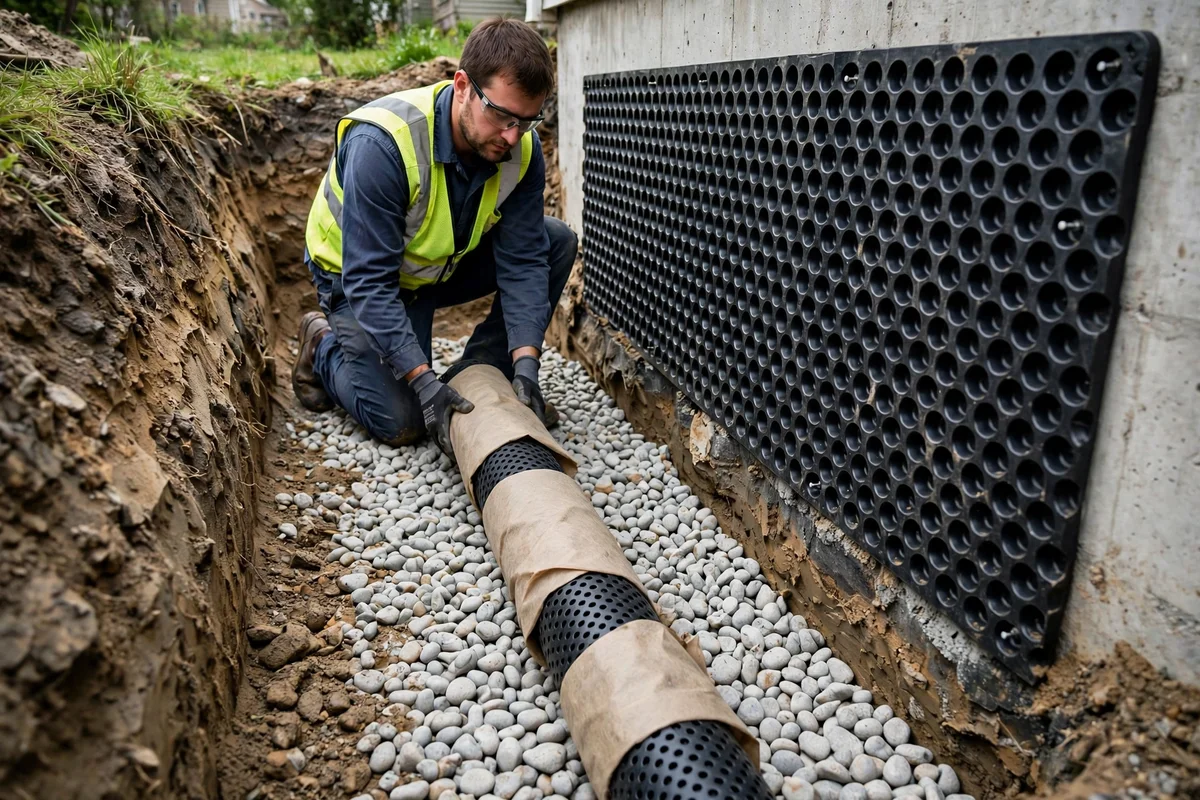
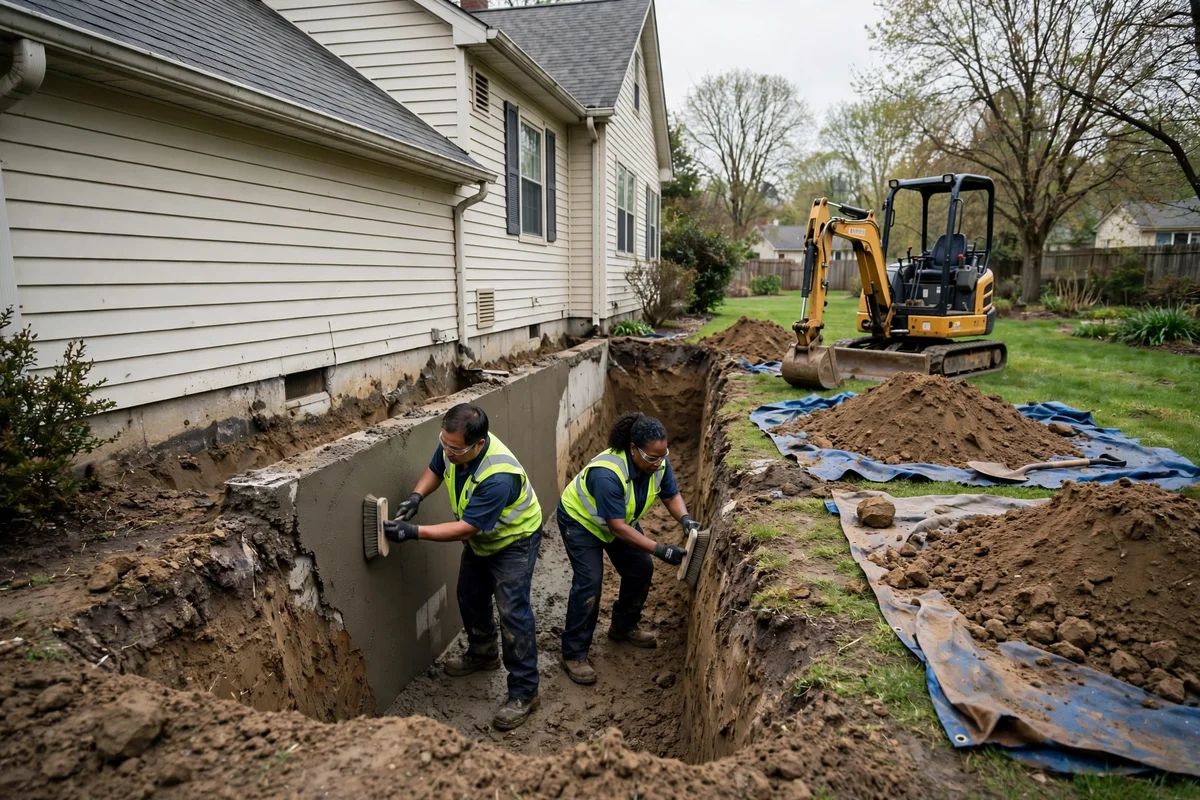
Exterior waterproofing stops water at the outside face of the foundation. The soil is excavated down to the footing, the wall is cleaned and repaired, a waterproof membrane is applied, a drainage board goes over it, and a footing drain carries collected water to a sump or a daylight outlet before the trench is backfilled. It is the most thorough fix for a leaking wall, but also the most disruptive and usually the most expensive, because it means digging up plantings, walkways and sometimes part of a driveway.
For Sea Cliff homes, this is often one of the first things a pro will look at.
- Wet wall cavities behind finished drywall
- Planning to finish the basement and wanting dry walls
- Leaks through the middle of the wall, not just at the floor joint
Downspout and Grading Fixes for Sea Cliff Homes
Before paying for a drainage system, walk around the house in a heavy rain. Look for gutters spilling over, downspouts emptying beside the foundation, and puddles that form against the wall. Extending downspouts, adding splash blocks or burying discharge lines, cleaning and resizing gutters, and rebuilding the soil grade so it falls away from the house solve a surprising share of basement leaks at a fraction of the cost of other repairs.
For Sea Cliff homes, this is often one of the first things a pro will look at.
- Water stains below gutter seams
- Soil, mulch or patios that slope toward the house
- Gutters that overflow in heavy rain
French Drains and Yard Drainage in Sea Cliff
Yard drainage covers the whole path water takes across your property: where it pools after a storm, where downspouts discharge, and where it leaves the lot. Catch basins, channel drains across driveways, dry wells and French drains can each solve a different part of the problem. A good contractor will look at where water collects during a real rain before recommending one of them.
Given local conditions on Nassau County's North Shore, this is one of the more common requests in Sea Cliff.
- Soggy lawn or erosion on the uphill side of the house
- Downspouts with nowhere to drain
- Water running down a driveway toward the garage
Interior Waterproofing for Sea Cliff Basements
Think of interior waterproofing as a pressure-relief system. Instead of trying to hold back saturated soil, it lets water reach a collection channel under the edge of the slab, where a perforated pipe carries it to a sump pit and the pump sends it outside. A wall membrane directs any seepage through the wall down behind the system rather than onto the floor. The work happens entirely inside, which keeps landscaping, driveways and neighboring property out of the picture.
- Efflorescence (white, chalky deposits) on block or concrete walls
- Water along the floor-wall joint after rain or snowmelt
- A musty smell that comes back after cleaning
Sump Pump Installation in Sea Cliff
Most sump failures happen for simple reasons: a stuck float switch, a clogged intake, a frozen or crushed discharge line, or a pump that has simply reached the end of its life. Many pumps last roughly seven to ten years depending on use. A sealed lid keeps out debris and reduces humidity and odors, and a water alarm can warn you when the water rises before it reaches the floor.
- Discharge line that ends right next to the house
- The pump runs constantly or cycles on and off rapidly
- Loud grinding, rattling or humming
Leaking Basement Crack Repair in Sea Cliff
Most poured concrete walls develop thin vertical shrinkage cracks as the concrete cures, and a crack that lets water in can usually be sealed from inside by injecting it under low pressure. Polyurethane foam expands to fill the crack and stays flexible, which suits leaks; epoxy bonds the two sides together and is used when structural strength matters. Either way, the crack should be injected through its full depth, not just covered on the surface.
- A crack that has been patched and leaks again
- Leaks around pipe or tie-rod penetrations
- Cracks wider than about 1/8 inch
Other Waterproofing Services
Pros serving Sea Cliff also handle basement humidity control, crawl space encapsulation, backwater valves and sewer backup protection. These come up less often locally but follow the same approach: find the source, then fix it.
Before You Call: What to Check
- Check where your downspouts discharge and whether gutters overflow.
- Check your sump pump, if you have one, and note how often it runs.
- Note any musty smells or mold on stored items.
- Take photos of wet areas, cracks and stains, with dates.
How Local Pros Typically Handle the Job
- Inspection. The pro looks at where and when water appears, checks gutters, downspouts and grading outside, and inspects walls, floor joints and cracks inside.
- Diagnosis. A clear explanation of the cause should come before any recommendation, so you know why a given system is being proposed.
- Recommendation. You get a written scope: interior or exterior work, sump details, crack repairs, drainage changes and a price.
- Installation and follow-up. Work is scheduled, completed and tested, and you get maintenance guidance for the sump and drains.
Sea Cliff Waterproofing FAQ
Do I need interior or exterior waterproofing for my Sea Cliff home?
Interior drainage with a sump manages water that reaches the wall and is the more common choice where lots are small or hardscape surrounds the house. Exterior waterproofing stops water at the outside face of the wall and suits finished basements and larger lots. A pro should explain which fits your home after inspecting it.
Can I waterproof a finished basement in Sea Cliff without tearing it out?
Sometimes. Exterior waterproofing works from outside, and some interior systems can be installed by removing only the lower part of the finished wall. A pro will need to see where water is entering first.
How do I know whether water in my Sea Cliff basement is groundwater or runoff?
Watch the timing. Water that appears during or right after rain, on the side of the house where a downspout empties, usually traces to roof runoff or grading. Water that seeps at the floor-wall joint a day or more after rain, or during snowmelt, points to groundwater pressure. Exterior waterproofing and footing drains are more practical on the North Shore's larger lots than in denser parts of Nassau.
Dawn Waterproofing connects homeowners with independent local service providers and does not perform the work. Availability, licensing, pricing and scheduling are set by the provider you speak with.