
What Drives Basement Water: Waterproofing in Great Neck
Great Neck occupies a peninsula on the North Shore, with hilly streets that run down to Little Neck Bay and Manhasset Bay.
Retaining walls and terraced yards are common, and when their drainage fails, water ends up against the house. The North Shore sits on the Harbor Hill moraine, the ridge of glacial debris left at the end of the last ice age, so many lots slope steeply toward the harbors and the Sound.
Harborfront streets near Manhasset Bay, Hempstead Harbor and Oyster Bay can see tidal flooding during coastal storms. Housing ranges from early-1900s estates and village homes to mid-century colonials and split-levels, many with full basements.
What that means for waterproofing in practice: Older fieldstone or block foundations may need interior drainage as well as crack sealing. Exterior waterproofing and footing drains are more practical on the North Shore's larger lots than in denser parts of Nassau.
This page covers Great Neck, ZIP code 11020. After a heavy storm, walk the uphill side of the house and look for water pooling against the foundation or a retaining wall.
Waterproofing Services Available in Great Neck
The sections below are ordered by how often each issue comes up in homes like those around Great Neck. Each one explains what the work involves and the signs that suggest you may need it.
Exterior Waterproofing for Great Neck Homes
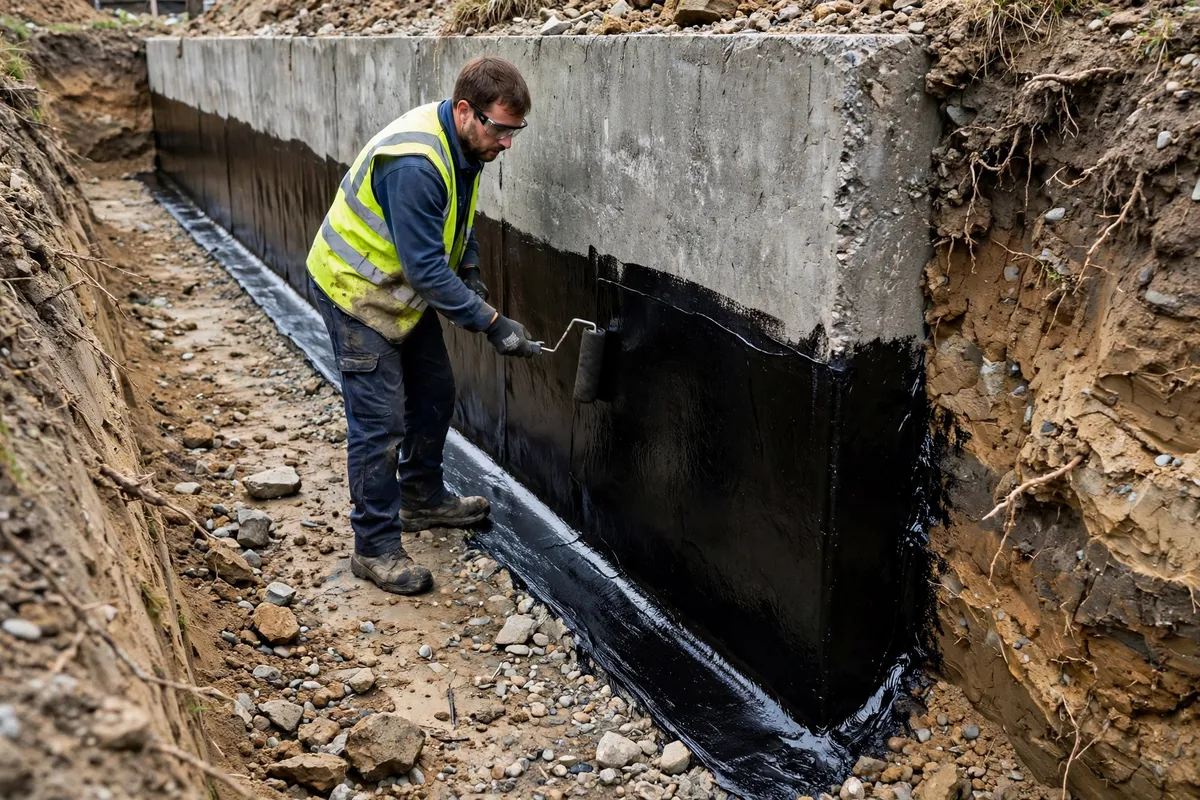
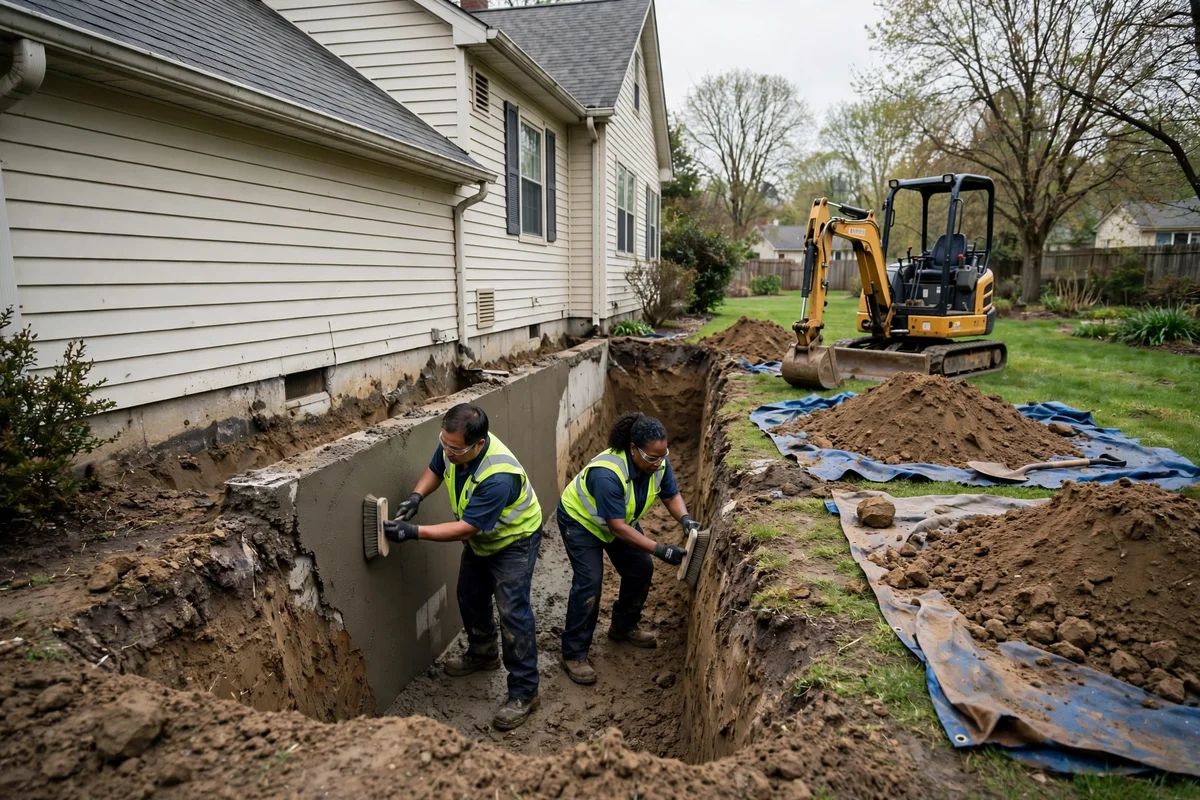
Exterior foundation waterproofing is the outside-in fix: excavate along the wall to the footing, repair cracks, apply a continuous membrane, add a drainage board to protect it and relieve pressure, and lay a footing drain that carries water to a sump or a safe outlet. Because it keeps water out of the wall itself, it's often recommended before a basement is finished. It's also the most invasive option, so plan for plantings, walks and utility lines along the dig.
For Great Neck homes, this is often one of the first things a pro will look at.
- Leaks through the middle of the wall, not just at the floor joint
- Water entering at window wells or foundation penetrations
- A failed tar or damp-proof coating seen during a previous dig
Downspout and Grading Fixes for Great Neck Homes
A large share of basement leaks start at the roof. Every inch of rain on 1,000 square feet of roof produces roughly 600 gallons of water, and gutters that overflow or downspouts that empty at the foundation put that water right where it does the most harm. Downspout extensions that carry water 4 to 6 feet or more away, or buried lines to a dry well or the street where local rules allow, are often the simplest fix.
For Great Neck homes, this is often one of the first things a pro will look at.
- Basement leaks on the same side as a downspout
- Water stains below gutter seams
- Erosion trenches under the drip line
French Drain Installation in Great Neck
A French drain is a gravel-filled trench with a perforated pipe that collects groundwater and surface water and carries it away from the house. Outside, it can intercept water on a slope before it reaches the foundation (often called a curtain drain), or it can run along the footing as a foundation drain. Inside, the same idea is used in an interior perimeter drain. Fabric wrapped around the pipe keeps soil from clogging it.
In Great Neck, this ranks among the most frequent reasons homeowners call.
- Soggy lawn or erosion on the uphill side of the house
- Downspouts with nowhere to drain
- A wet basement wall on only one side of the house
Interior Basement Waterproofing in Great Neck
If water shows up where the floor meets the wall, the cause is usually hydrostatic pressure from saturated soil pushing water through the joint and the porous concrete or block. An interior drainage system relieves that pressure by giving the water an easy path to a sump instead of across your floor. It doesn't make the wall itself watertight, so it's typically paired with a vapor barrier on the walls and, where the air stays humid, a dehumidifier.
- Rust on the bottom of metal shelving, furnace or water heater
- Efflorescence (white, chalky deposits) on block or concrete walls
- Damp carpet or warped flooring in a finished basement
Sump Pump Installation in Great Neck
A sump pump sits in a sealed pit at the lowest point of the basement and pumps out water collected by interior or footing drains. The parts that matter most are a pump sized for how much water actually comes in, a check valve so pumped water doesn't fall back into the pit, a discharge line that carries the water well away from the foundation, and a backup. Battery-backup pumps keep running when storms knock out power, which is often exactly when the pump is needed.
- Discharge line that ends right next to the house
- The pump is more than seven to ten years old
- The pump runs constantly or cycles on and off rapidly
Leaking Basement Crack Repair in Great Neck
Most poured concrete walls develop thin vertical shrinkage cracks as the concrete cures, and a crack that lets water in can usually be sealed from inside by injecting it under low pressure. Polyurethane foam expands to fill the crack and stays flexible, which suits leaks; epoxy bonds the two sides together and is used when structural strength matters. Either way, the crack should be injected through its full depth, not just covered on the surface.
- Water trickling from a vertical crack after rain
- Leaks around pipe or tie-rod penetrations
- Rust stains coming from a crack (a sign of corroding rebar or wall ties)
Other Waterproofing Services
Pros serving Great Neck also handle basement humidity control, crawl space encapsulation, backwater valves and sewer backup protection. These come up less often locally but follow the same approach: find the source, then fix it.
Before You Call: What to Check
- Take photos of wet areas, cracks and stains, with dates.
- Note any musty smells or mold on stored items.
- Check your sump pump, if you have one, and note how often it runs.
- Check where your downspouts discharge and whether gutters overflow.
How Local Pros Typically Handle the Job
- Inspection. Expect questions about when the water shows up, plus a walk around the outside of the house to check gutters, grading and window wells.
- Diagnosis. They explain the likely source, whether surface runoff, groundwater pressure, a high water table, condensation or a sewer backup.
- Recommendation. The proposal should spell out the system, its length, the sump and discharge, and what's excluded.
- Installation and follow-up. Work is scheduled, completed and tested, and you get maintenance guidance for the sump and drains.
Great Neck Waterproofing FAQ
What should I ask a waterproofing contractor serving Great Neck?
Ask where they think the water is coming from and why, what the system includes, where the sump discharges, how it should be maintained and what the warranty covers. Comparing written scopes makes quotes easier to weigh.
Why does my Great Neck basement smell musty even when the floor is dry?
Humid summer air condenses on cool basement walls and floors, and moisture can wick through concrete without visible water. A hygrometer reading above about 60 percent humidity is a sign the air needs drying. Older fieldstone or block foundations may need interior drainage as well as crack sealing.
Do I need interior or exterior waterproofing for my Great Neck home?
Interior drainage with a sump manages water that reaches the wall and is the more common choice where lots are small or hardscape surrounds the house. Exterior waterproofing stops water at the outside face of the wall and suits finished basements and larger lots. A pro should explain which fits your home after inspecting it.
Dawn Waterproofing connects homeowners with independent local service providers and does not perform the work. Availability, licensing, pricing and scheduling are set by the provider you speak with.