Long Island's ground is mostly glacial sand and gravel, which drains well. So why do so many Long Island basements take on water? Because the cause changes depending on where you live, and the fix should match the cause.
South Shore: the water table and the tides
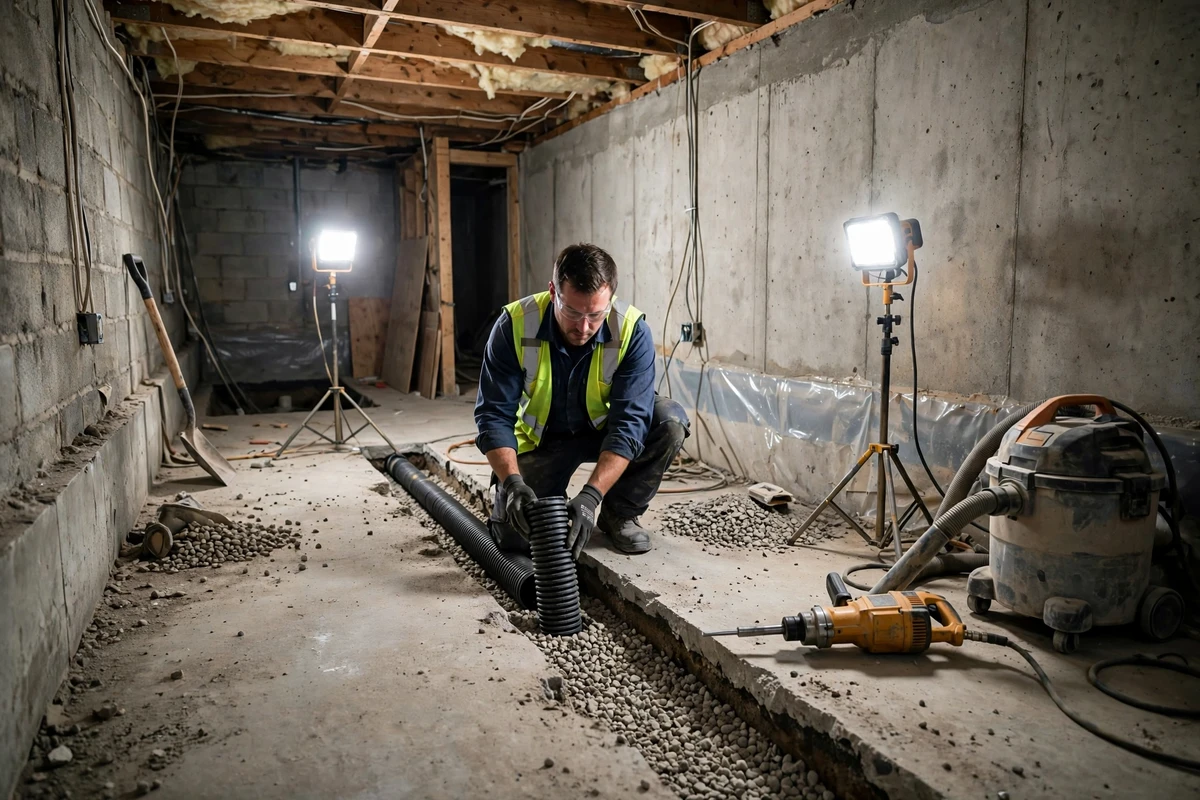
Along the bays of the South Shore, from the Five Towns and Long Beach to Lindenhurst, Babylon and Mastic Beach, the ground sits only a few feet above high tide. The water table is high and rises with storm tides. Basements here often take water from below, at the floor-wall joint or through the slab. Hurricane Sandy in 2012 showed how quickly surge can reach homes along the canals. Reliable sump pumps with battery backup, interior drainage and moving equipment above flood level are common approaches. Learn more about waterproofing in New York communities on the South Shore.
North Shore: hillsides and perched water
The North Shore sits on the Harbor Hill moraine, a ridge of glacial debris with steep slopes toward the harbors and the Sound. Runoff flows toward the uphill wall of a house, and dense layers of till can trap water against the foundation. Exterior drainage, curtain drains uphill of the house, and regrading often help here.
Central Long Island: roofs, gutters and grading
In the sandy middle of the island, basement leaks more often come from the roof than from the ground. Gutters that overflow, downspouts that empty right at the foundation, and patios or walks that slope toward the house can all send water in. These are some of the least expensive problems to fix.
Sewer backups in Queens and older neighborhoods
In parts of Queens and other areas with combined sewers, heavy rain can overwhelm the public system and push sewer water up through floor drains. Hurricane Ida in 2021 caused deadly basement flooding in Queens. A backwater valve installed by a licensed plumber is often the most important fix.
Finding the source first
Before spending money, note when water shows up (during rain, after rain, or only in humid weather), where it appears, and whether it smells like sewage. Those clues help a contractor recommend the right fix, from extending downspouts to installing a waterproofing system.
This article is general information, not professional advice. Dawn Waterproofing connects homeowners with independent local service providers and does not perform the work.