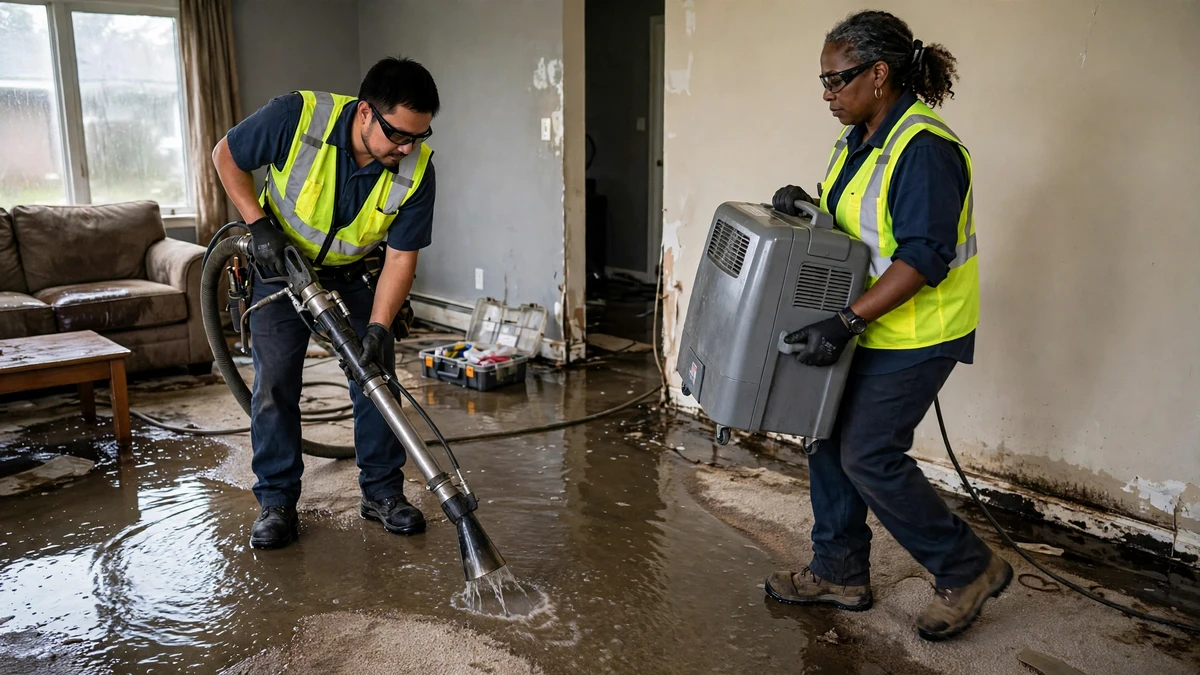
Water damage removal services start with speed. The longer water sits, the further it wicks into drywall, subfloors and insulation, and mold can start within 24 to 48 hours. Professional crews extract water, remove materials that can't be saved, dry the structure with air movers and dehumidifiers, and track moisture levels until the home is dry.
The source of the water matters for both cleanup and insurance. Clean water from a supply line is handled differently from flood water or sewage, which are contaminated and require removal of porous materials.
Types of Water Damage Removal Services
Emergency Water Extraction
The first goal after a flood or leak is to stop the source and get standing water out as fast as possible. Restoration crews use submersible pumps for deep water and truck-mounted or portable extractors for carpet and pad, which remove far more water than wet vacs or fans. Every hour water sits in a home, it wicks further up drywall and into subfloors, so extraction is usually done the same day the damage is found.
- Standing water on floors
- Soaked carpet and pad
- Water that has spread under walls into other rooms
- A finished basement that has flooded
Structural Drying and Dehumidification
Removing visible water is only the start. Drywall, framing, subfloors and concrete absorb water and can stay wet for weeks without professional drying. Restoration crews set up air movers to move air across wet surfaces and commercial dehumidifiers to pull moisture out of the air, and they measure moisture in materials each day until readings return to normal. Drying usually takes three to five days, depending on materials and conditions.
- Damp drywall or baseboards after the water is gone
- Musty smell a few days after a leak
- Swollen or cupping wood flooring
- Peeling paint or bubbling wall surfaces
Burst and Frozen Pipe Water Damage
When water freezes in a pipe it expands, and the pressure often splits the pipe somewhere other than where the ice formed. The leak usually starts when the pipe thaws, which is why burst pipes are often discovered after a cold snap breaks. The first step is to shut off the main water valve; everyone in the house should know where it is. Pipes on exterior walls, in crawl spaces, garages and attics, and in cabinets on outside walls are the most vulnerable.
- Water spraying or dripping from a pipe
- A sudden drop in water pressure in winter
- Frost on exposed pipes
- Water stains on ceilings below plumbing
Basement Flood Cleanup
Basement flooding comes from several sources: groundwater rising through the floor and walls, surface water entering through window wells and doors, a failed sump pump, or sewer water backing up through drains. Cleanup starts with pumping out the water, then removing wet carpet, pad and damaged drywall, cleaning and disinfecting surfaces, and drying the space with professional equipment.
- Standing water in the basement
- Water entering through walls or the floor
- A failed sump pump
- Water through window wells or basement doors
Sewage Backup Cleanup
Sewage contains bacteria, viruses and other pathogens, and it's classified as Category 3 or black water. Cleanup should be done by trained technicians with protective equipment. Contaminated porous materials such as carpet, pad, drywall and insulation are removed and disposed of, and hard surfaces are cleaned and treated with antimicrobial products before drying. Children, pets and anyone with health concerns should stay out of the area.
- Sewage coming up through floor drains, toilets or tubs
- Strong sewage odor
- Gurgling drains
- Multiple fixtures backing up at once
Mold Prevention and Remediation
Mold can begin to grow on wet materials within 24 to 48 hours, which is why fast drying matters so much. Once mold is established, remediation involves containing the area with plastic sheeting and negative air pressure so spores don't spread, removing moldy porous materials, cleaning surfaces with HEPA vacuums and antimicrobial treatment, and drying the area thoroughly. The moisture source has to be fixed, or the mold will return.
- Visible mold on walls, ceilings or stored items
- Musty smell that doesn't go away
- Water damage that wasn't dried within two days
- Allergy symptoms that worsen at home
Ceiling and Drywall Water Damage
Water stains on a ceiling usually come from a roof leak, an ice dam, a leaking shower or toilet above, or condensation from ducts and pipes. A sagging or bulging ceiling may be holding water and can collapse, so stay out from under it and, if it's safe, puncture a small hole to drain it into a bucket. Thermal cameras and moisture meters help find how far the water has spread before ceilings are opened.
- Brown or yellow stains on ceilings
- Sagging or bulging ceiling drywall
- Peeling paint or bubbling on ceilings
- Water dripping from light fixtures
Storm and Roof Leak Water Damage
Heavy rain, wind-driven rain, coastal storms and snowmelt can force water through roofs, windows, doors and foundation walls. After a storm, the first step is to protect the house from more water: tarping a damaged roof, boarding broken windows and stopping water from entering. Then extraction, removal of wet materials and drying can begin. Document the damage with photos before cleanup starts.
- Water entering through the roof, windows or doors
- Ceiling stains after storms or snowmelt
- Icicles and ice buildup along the roof edge
- Wet walls below windows
Contents Cleaning and Insurance Documentation
Restoration crews can move furniture and belongings out of harm's way, pack out items to be cleaned or dried, and document what can be saved and what can't. Photos, moisture readings, drying logs and a list of damaged items help when filing an insurance claim. Keep receipts for emergency expenses such as hotel stays and supplies.
- Damaged furniture, rugs or belongings
- Documents and photos that got wet
- Need for an itemized list for an insurance claim
- Items that need professional cleaning or drying
How to Compare Water Damage Removal Services
- Ask how quickly a crew can arrive and start extraction.
- Ask how moisture will be measured and documented during drying.
- Ask what will be removed and why, especially after flood or sewage water.
- Ask whether the company works with your insurance company.
- In New York, mold projects over 10 square feet require licensed mold contractors.
Related Help
Appliance leaks are among the most common sources of indoor water damage. Once the water is cleaned up, an appliance technician such as Patterson's Appliance Repair can find why a washer, dishwasher or refrigerator leaked. When a shower or tiled floor was the source, a tile specialist such as Green Tile Installer can rebuild it so it stays watertight.
Where Water Damage Removal Help Is Available
Coverage includes 340 New York communities, each with its own page. Choose a state to see local conditions and communities.
Guides and Articles
- Water Damage in Your Home: What to Do in the First 24 Hours
- Frozen and Burst Pipes in New York Winters
- Signs of a Hidden Bathroom Leak
Dawn Waterproofing connects homeowners with independent local service providers and does not perform the work.