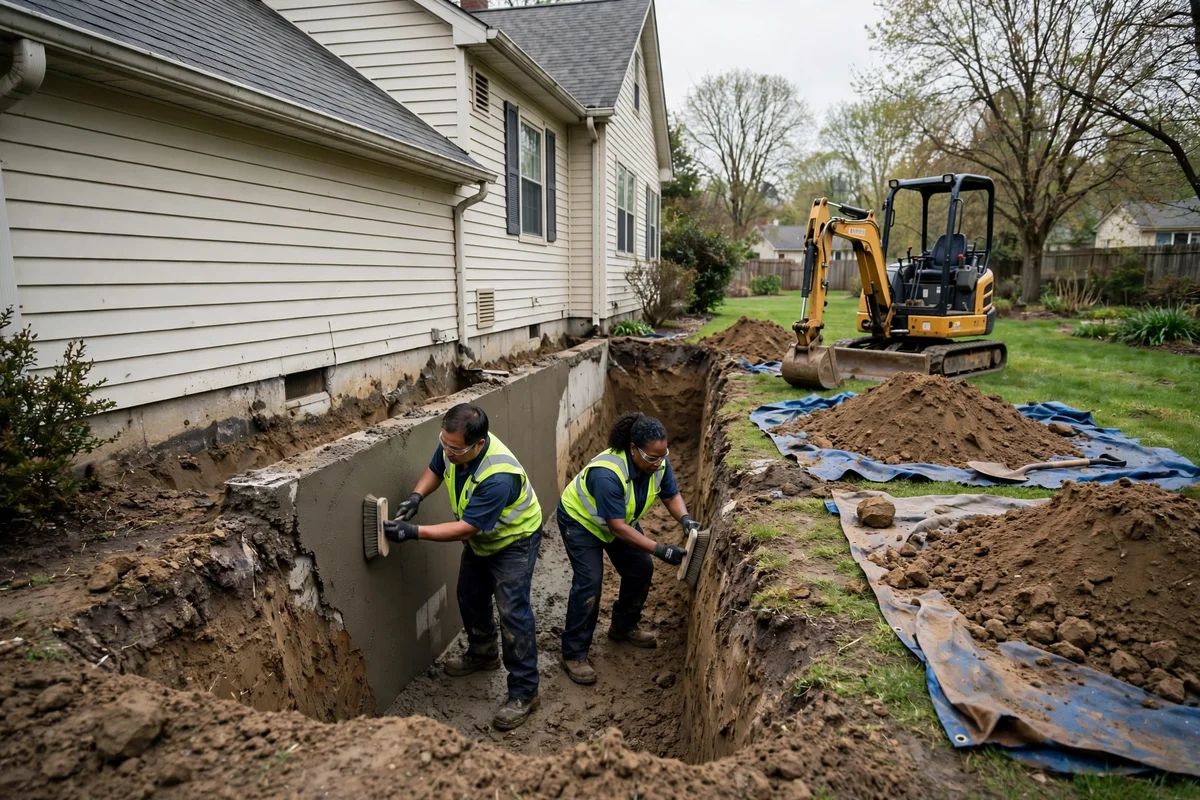
Before investing in a waterproofing system, check how water moves around the outside of your house. Many basement leaks start at the roof or the yard.
Gutters and downspouts
Every inch of rain on 1,000 square feet of roof produces about 600 gallons of water. If gutters overflow or downspouts empty at the foundation, that water soaks the soil right next to the basement wall. Keep gutters clean, and extend downspouts at least 4 to 6 feet from the house, or connect them to a dry well or approved outlet.
Grading
The ground should slope away from the house, ideally about 6 inches over the first 10 feet. Over time soil settles, flower beds get built up, and patios sink toward the house. Restoring the slope is often inexpensive.
Decks, porches and patios
Decks and porches attached to the house can direct water toward the foundation if they're not built and flashed properly, and patios that settle can channel rain to the wall. When you're building or replacing a deck, porch or fence near the house, a contractor such as Home Fence Installation Near Me can help plan it so water drains away from the foundation.
When it's more than drainage
If water keeps coming in after these fixes, the cause may be groundwater or hydrostatic pressure. Then interior drainage, a sump pump or exterior waterproofing may be needed. Learn more about waterproofing and waterproofing in New York.
This article is general information, not professional advice. Dawn Waterproofing connects homeowners with independent local service providers and does not perform the work.