Local Conditions That Affect Waterproofing in Long Beach
Long Beach is on a barrier island between the Atlantic Ocean and Reynolds Channel, and Hurricane Sandy flooded much of the city in 2012 from both the ocean and the bay sides.
The South Shore borders the bays and canals behind the barrier beaches, and its ground sits only a few feet above high tide in many places. The water table is high and responds to the tides, so basements here can take water from below as well as from the surface.
Housing is a mix of 1920s-to-1960s capes, ranches and bungalows, along with newer elevated homes built to post-Sandy flood elevations. Saltwater intrusion and salt spray speed up corrosion of rebar, fasteners and mechanical equipment.
What that means for waterproofing in practice: Flood vents and elevating equipment above flood level are part of the conversation on many South Shore homes. With a high, tidal water table, a sump with a battery backup and a check valve is often central to keeping a basement dry.
This page covers Long Beach, ZIP code 11561. Check tide tables before a coastal storm; the worst flooding usually lines up with high tide.
Types of Waterproofing Services for Long Beach Homes
The sections below are ordered by how often each issue comes up in homes like those around Long Beach. Each one explains what the work involves and the signs that suggest you may need it.
Sump Pump Installation in Long Beach
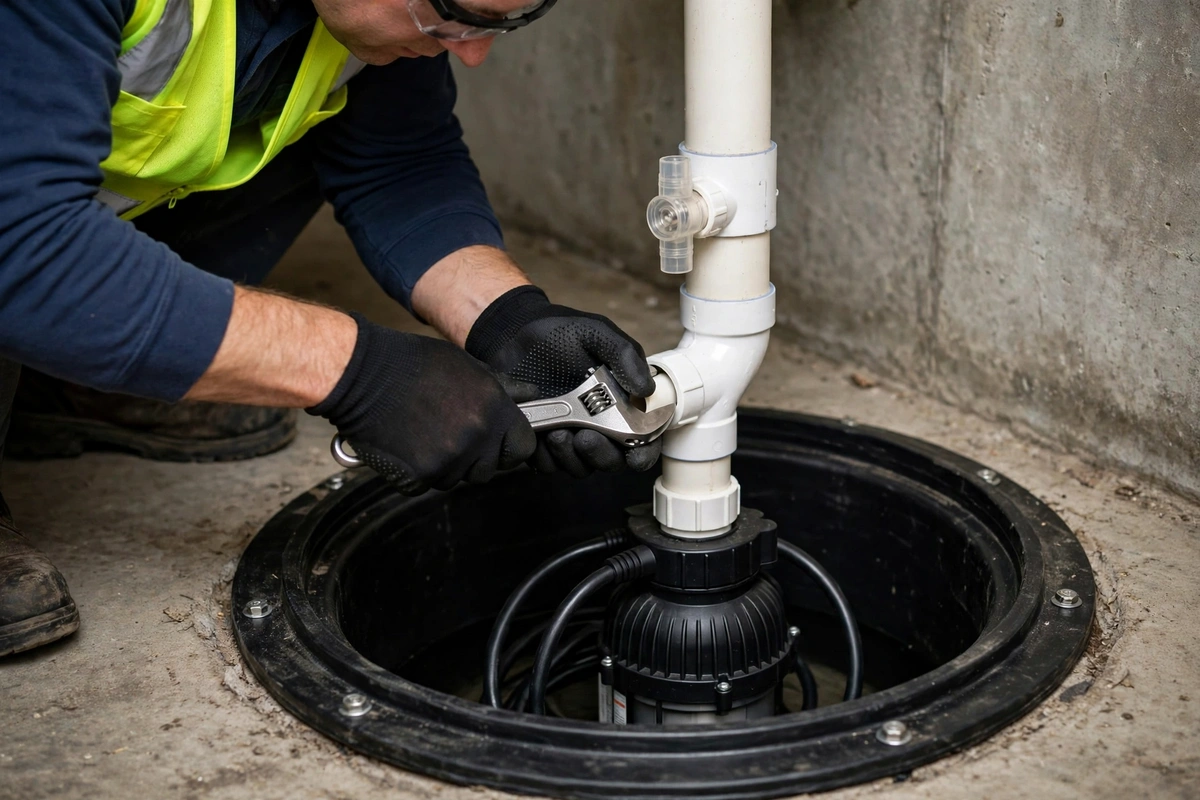
Your sump pump is the last line of defense, so it pays to choose it carefully. A cast-iron or heavy-duty pump sized to the real inflow, a vertical or tethered float that can't snag on the pit wall, a check valve, a sealed lid and a discharge that ends well away from the foundation are the basics. A battery backup or water-powered backup covers storms that cut power, and an audible high-water alarm warns you before the floor gets wet.
Given local conditions on Nassau County's South Shore, this is one of the more common requests in Long Beach.
- Water around the pit after a power outage
- Discharge line that ends right next to the house
- Loud grinding, rattling or humming
Crawl Space Waterproofing in Long Beach
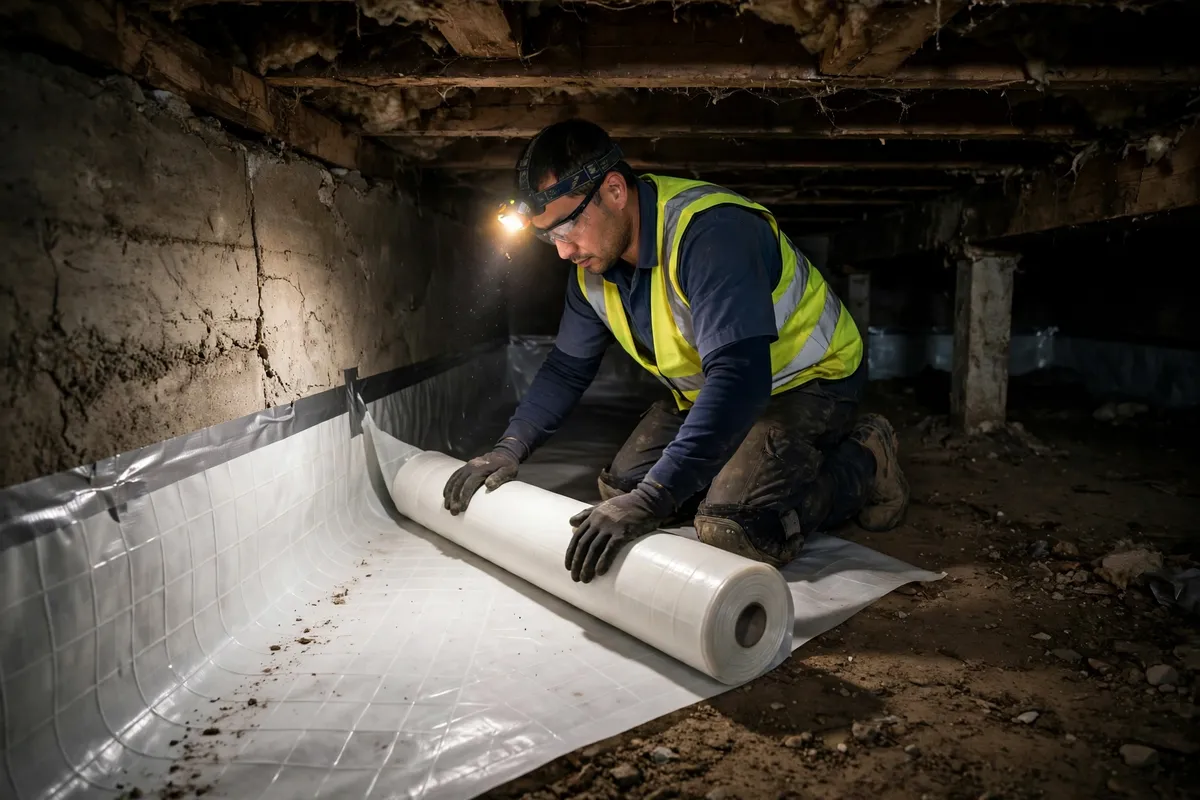
An encapsulated crawl space is closed to the outside and kept dry like the rest of the house. The process typically includes removing debris, sealing foundation vents and rim joists, laying a reinforced vapor barrier over the ground and up the walls with taped seams, insulating the walls and adding a dehumidifier or a small supply of conditioned air. If water collects on the ground, a drain and sump are installed before the liner goes down.
Given local conditions on Nassau County's South Shore, this is one of the more common requests in Long Beach.
- Insulation falling down between floor joists
- High humidity or condensation on ducts and pipes
- Mold or white fuzzy growth on joists
Interior Waterproofing for Long Beach Basements
Think of interior waterproofing as a pressure-relief system. Instead of trying to hold back saturated soil, it lets water reach a collection channel under the edge of the slab, where a perforated pipe carries it to a sump pit and the pump sends it outside. A wall membrane directs any seepage through the wall down behind the system rather than onto the floor. The work happens entirely inside, which keeps landscaping, driveways and neighboring property out of the picture.
Given local conditions on Nassau County's South Shore, this is one of the more common requests in Long Beach.
- Peeling paint or bubbling wall coatings
- Water along the floor-wall joint after rain or snowmelt
- Damp carpet or warped flooring in a finished basement
Downspout and Grading Fixes for Long Beach Homes
The ground should slope away from the house, ideally about 6 inches over the first 10 feet. Over the years, soil settles around foundations, flower beds get built up against the siding, and patios and walks sink toward the house, reversing the slope. Restoring the grade, raising low spots with clean fill and pitching hardscapes away from the wall costs far less than drainage systems and is often the first thing a good contractor checks.
- Water stains below gutter seams
- Soil, mulch or patios that slope toward the house
- Basement leaks on the same side as a downspout
Basement Humidity and Mold Prevention in Long Beach
A basement dehumidifier works best when it's sized for the space, drains continuously to a sump or floor drain, and runs alongside other fixes rather than instead of them. If a basement takes on liquid water, a dehumidifier can't keep up; the source needs to be fixed first. Sealing rim joists and insulating walls also reduces condensation.
- Rust on tools and appliances
- Windows that fog up in summer
- Condensation on cold water pipes or walls
Sewer Backup Prevention in Long Beach
If your basement floods only when the street floods, the water may be coming backward through the sewer connection. A backwater valve installed on the house's main sewer line closes automatically when the public sewer backs up, keeping sewage out of floor drains, toilets and tubs in the basement. Installation usually needs a licensed plumber and a permit, and the valve needs an access point so it can be cleaned and checked every year.
- A finished or rented basement below street level
- Water coming up through the basement floor drain during storms
- Sewage odor after heavy rain
Other Waterproofing Services
Pros serving Long Beach also handle leaking foundation crack repair, french drain and yard drainage, exterior foundation waterproofing. These come up less often locally but follow the same approach: find the source, then fix it.
Before You Call: What to Check
- Check where your downspouts discharge and whether gutters overflow.
- Note when water appears: during rain, a day later, during snowmelt, or only in humid weather.
- Check your sump pump, if you have one, and note how often it runs.
- Note any musty smells or mold on stored items.
How Local Pros Typically Handle the Job
- Inspection. The pro looks at where and when water appears, checks gutters, downspouts and grading outside, and inspects walls, floor joints and cracks inside.
- Diagnosis. They explain the likely source, whether surface runoff, groundwater pressure, a high water table, condensation or a sewer backup.
- Recommendation. The proposal should spell out the system, its length, the sump and discharge, and what's excluded.
- Installation and follow-up. Work is scheduled, completed and tested, and you get maintenance guidance for the sump and drains.
Long Beach Waterproofing FAQ
What should I ask a waterproofing contractor serving Long Beach?
Ask where they think the water is coming from and why, what the system includes, where the sump discharges, how it should be maintained and what the warranty covers. Comparing written scopes makes quotes easier to weigh.
Do I need interior or exterior waterproofing for my Long Beach home?
Interior drainage with a sump manages water that reaches the wall and is the more common choice where lots are small or hardscape surrounds the house. Exterior waterproofing stops water at the outside face of the wall and suits finished basements and larger lots. A pro should explain which fits your home after inspecting it.
How do I know whether water in my Long Beach basement is groundwater or runoff?
Watch the timing. Water that appears during or right after rain, on the side of the house where a downspout empties, usually traces to roof runoff or grading. Water that seeps at the floor-wall joint a day or more after rain, or during snowmelt, points to groundwater pressure. Flood vents and elevating equipment above flood level are part of the conversation on many South Shore homes.
Dawn Waterproofing connects homeowners with independent local service providers and does not perform the work. Availability, licensing, pricing and scheduling are set by the provider you speak with.