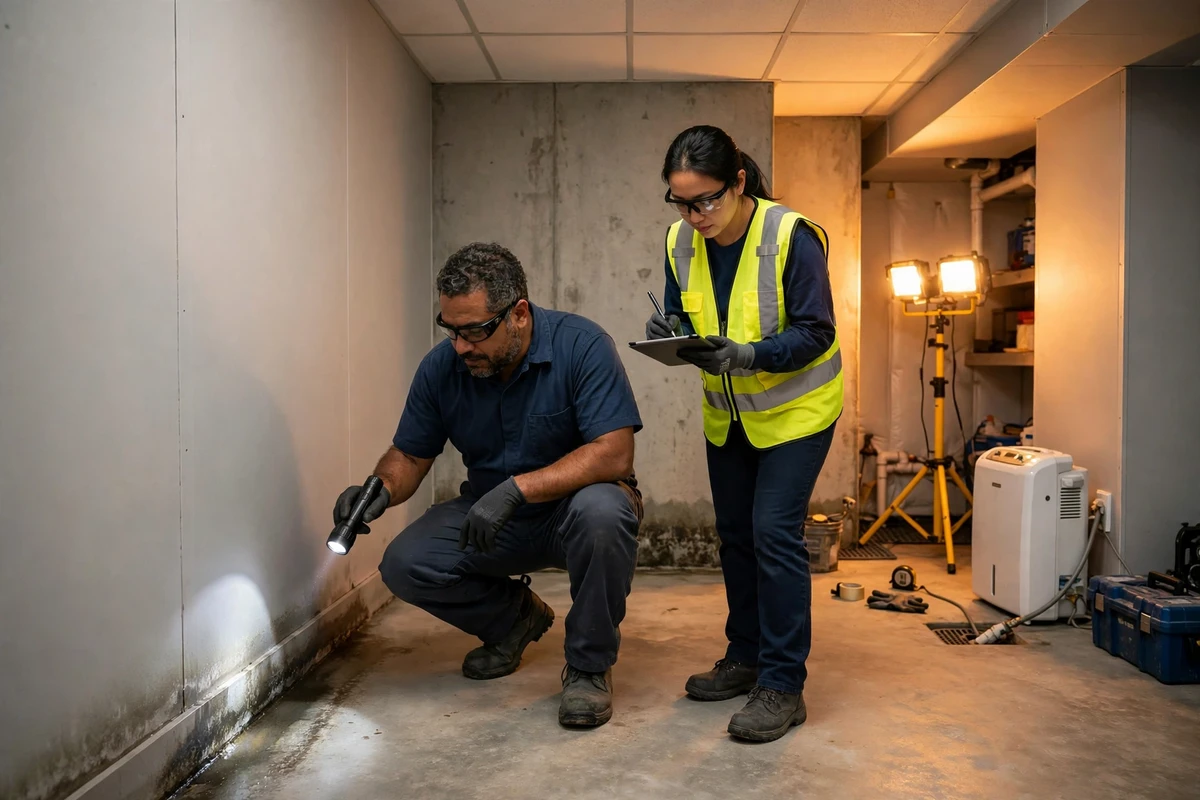
Local Conditions That Affect Waterproofing in Lawrence
Lawrence is one of the Five Towns, bordering the tidal marshes and channels along Reynolds Channel.
Tidal flooding now happens on some low streets during full-moon high tides and coastal storms, even without heavy rain. Saltwater intrusion and salt spray speed up corrosion of rebar, fasteners and mechanical equipment.
Hurricane Sandy's surge in October 2012 flooded thousands of homes along the Nassau South Shore, and many were raised, rebuilt or retrofitted afterward. Housing is a mix of 1920s-to-1960s capes, ranches and bungalows, along with newer elevated homes built to post-Sandy flood elevations.
What that means for waterproofing in practice: With a high, tidal water table, a sump with a battery backup and a check valve is often central to keeping a basement dry. Crawl spaces benefit from vapor barriers and drainage that let flood water leave quickly.
This page covers Lawrence, ZIP code 11559. Check tide tables before a coastal storm; the worst flooding usually lines up with high tide.
Types of Waterproofing Services for Lawrence Homes
The sections below are ordered by how often each issue comes up in homes like those around Lawrence. Each one explains what the work involves and the signs that suggest you may need it.
Sump Pump Installation and Replacement in Lawrence
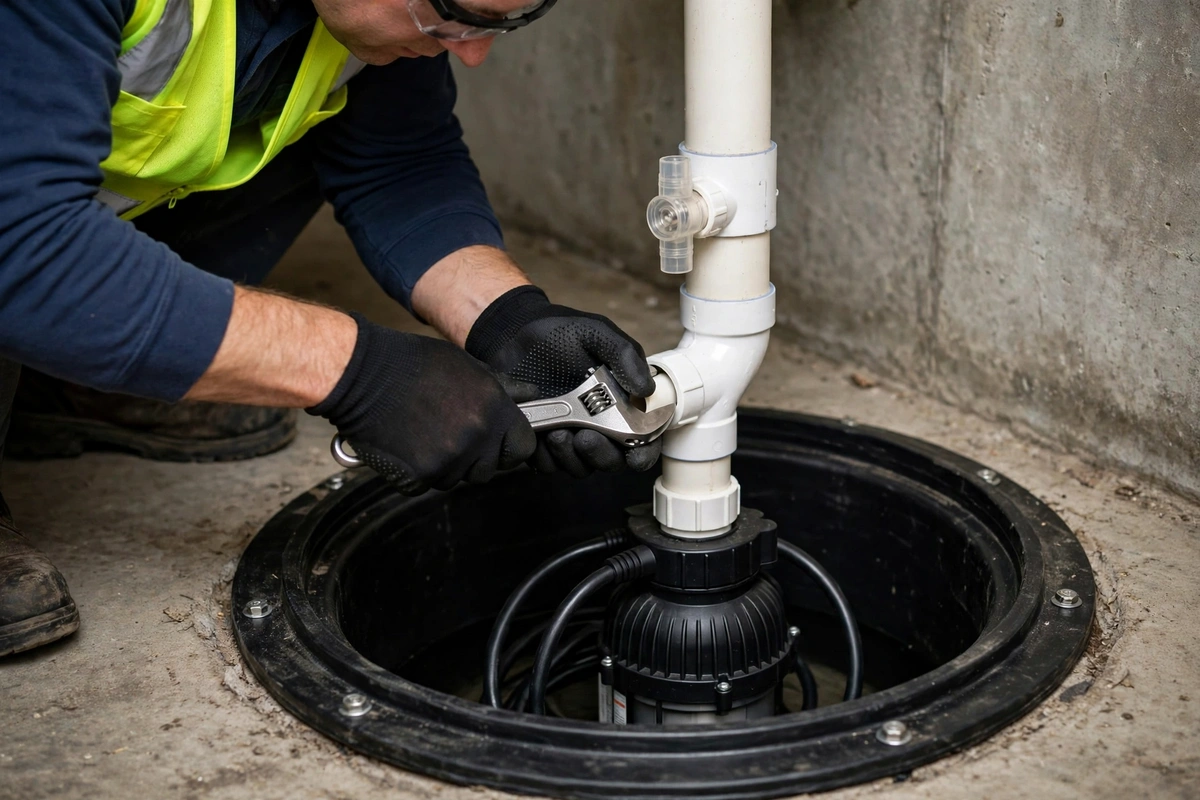
A sump pump sits in a sealed pit at the lowest point of the basement and pumps out water collected by interior or footing drains. The parts that matter most are a pump sized for how much water actually comes in, a check valve so pumped water doesn't fall back into the pit, a discharge line that carries the water well away from the foundation, and a backup. Battery-backup pumps keep running when storms knock out power, which is often exactly when the pump is needed.
In Lawrence, this ranks among the most frequent reasons homeowners call.
- Discharge line that ends right next to the house
- Water around the pit after a power outage
- The pump runs constantly or cycles on and off rapidly
Crawl Space Encapsulation in Lawrence
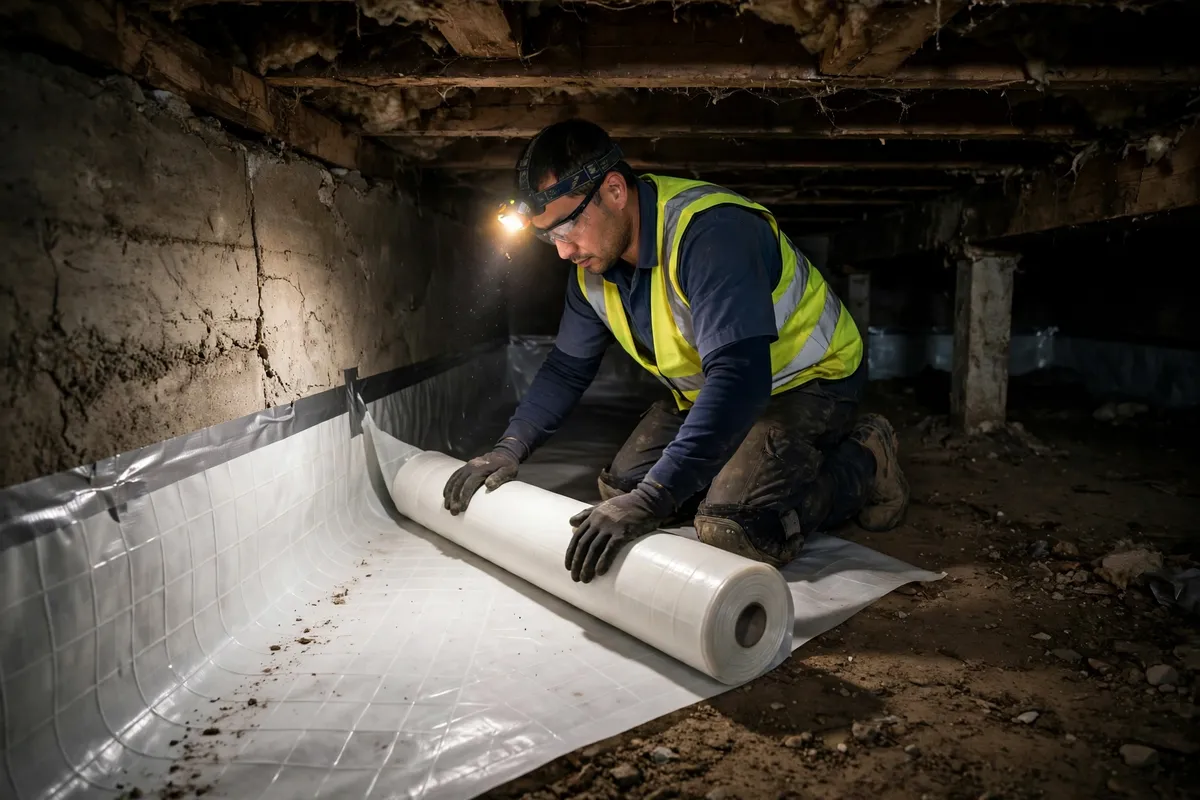
Moisture from a damp crawl space rises into the house: a large share of the air on the first floor can come from below. Signs of a problem include musty smells, cupped wood floors, sagging insulation and mold on joists. Encapsulation usually includes sealing the vents and rim joists, insulating the walls rather than the floor above, and adding a dehumidifier to keep relative humidity in a safe range.
Given local conditions on Nassau County's South Shore, this is one of the more common requests in Lawrence.
- Cupping or buckling hardwood floors
- High humidity or condensation on ducts and pipes
- Insulation falling down between floor joists
Interior Basement Waterproofing in Lawrence
Think of interior waterproofing as a pressure-relief system. Instead of trying to hold back saturated soil, it lets water reach a collection channel under the edge of the slab, where a perforated pipe carries it to a sump pit and the pump sends it outside. A wall membrane directs any seepage through the wall down behind the system rather than onto the floor. The work happens entirely inside, which keeps landscaping, driveways and neighboring property out of the picture.
In Lawrence, this ranks among the most frequent reasons homeowners call.
- Peeling paint or bubbling wall coatings
- Damp carpet or warped flooring in a finished basement
- Efflorescence (white, chalky deposits) on block or concrete walls
Downspout and Grading Fixes for Lawrence Homes
Before paying for a drainage system, walk around the house in a heavy rain. Look for gutters spilling over, downspouts emptying beside the foundation, and puddles that form against the wall. Extending downspouts, adding splash blocks or burying discharge lines, cleaning and resizing gutters, and rebuilding the soil grade so it falls away from the house solve a surprising share of basement leaks at a fraction of the cost of other repairs.
- Erosion trenches under the drip line
- Downspouts that end within a few feet of the foundation
- Gutters that overflow in heavy rain
Basement Dehumidification in Lawrence
Not every damp basement leaks. In summer, warm humid air meets cool foundation walls and floors and condenses, leaving them damp even when no water is coming in. A simple test is to tape a square of plastic to the wall for a few days: moisture under the plastic means it's coming through the wall; moisture on top means it's condensation. Keeping relative humidity below about 50 to 60 percent with a properly sized dehumidifier limits mold and musty odors.
- Condensation on cold water pipes or walls
- Musty or earthy smell in the basement
- Windows that fog up in summer
Sewer Backup Prevention in Lawrence
When the valve closes, the house can't drain either, so fixtures shouldn't be used during the storm. For basements that flood from sewer surcharges, a backwater valve combined with a sealed floor drain or a standpipe plug is often more effective than any wall treatment. If water appears only during intense storms and smells like sewage, ask about this before waterproofing the walls.
- Gurgling drains when it rains hard
- An older sewer lateral that has needed snaking before
- Sewage odor after heavy rain
Other Waterproofing Services
Pros serving Lawrence also handle leaking foundation crack repair, french drain and yard drainage, exterior foundation waterproofing. These come up less often locally but follow the same approach: find the source, then fix it.
Before You Call: What to Check
- Check where your downspouts discharge and whether gutters overflow.
- Take photos of wet areas, cracks and stains, with dates.
- Check your sump pump, if you have one, and note how often it runs.
- Note when water appears: during rain, a day later, during snowmelt, or only in humid weather.
How Local Pros Typically Handle the Job
- Inspection. Expect questions about when the water shows up, plus a walk around the outside of the house to check gutters, grading and window wells.
- Diagnosis. They explain the likely source, whether surface runoff, groundwater pressure, a high water table, condensation or a sewer backup.
- Recommendation. The proposal should spell out the system, its length, the sump and discharge, and what's excluded.
- Installation and follow-up. After installation, the system is tested and you're shown how to maintain the sump and keep drains clear.
Lawrence Waterproofing FAQ
Can I waterproof a finished basement in Lawrence without tearing it out?
Sometimes. Exterior waterproofing works from outside, and some interior systems can be installed by removing only the lower part of the finished wall. A pro will need to see where water is entering first.
How often should a sump pump be checked in Lawrence?
Test it a few times a year by pouring water into the pit until the float lifts, and before the wet season. Check the discharge line in winter to make sure it isn't frozen or blocked. Many pumps last roughly seven to ten years.
How do I know whether water in my Lawrence basement is groundwater or runoff?
Watch the timing. Water that appears during or right after rain, on the side of the house where a downspout empties, usually traces to roof runoff or grading. Water that seeps at the floor-wall joint a day or more after rain, or during snowmelt, points to groundwater pressure. With a high, tidal water table, a sump with a battery backup and a check valve is often central to keeping a basement dry.
Dawn Waterproofing connects homeowners with independent local service providers and does not perform the work. Availability, licensing, pricing and scheduling are set by the provider you speak with.