Local Conditions That Affect Waterproofing in Centerport
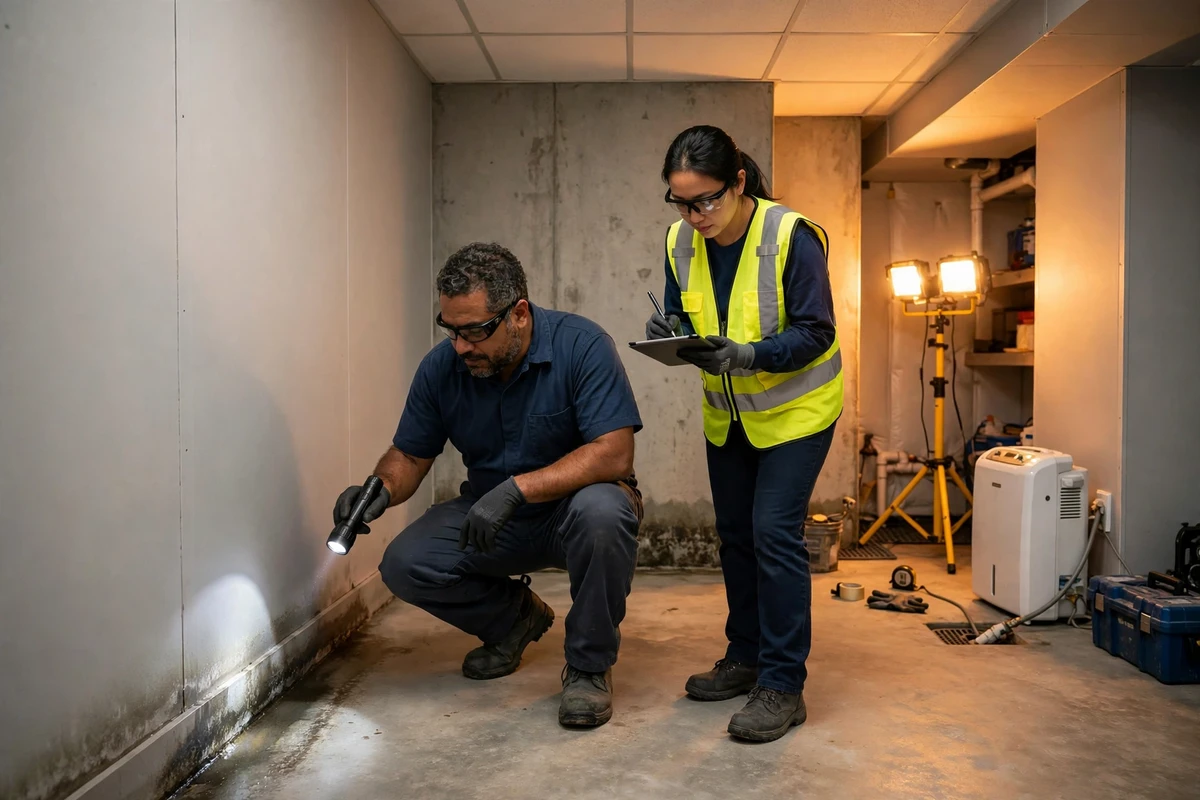
The North Shore of Suffolk rises onto the Harbor Hill moraine, with rolling hills, steep bluffs and deep harbors such as Huntington, Northport, Stony Brook and Port Jefferson. Glacial soils here mix sand and gravel with denser layers that slow drainage, so water can perch against a foundation even on high ground.
Low-lying harbor streets can flood during coastal storms when high tide and onshore winds line up. Sloped lots send runoff toward the low side of a house, and a basement wall cut into a hillside can carry steady water pressure after long rains.
What that means for waterproofing in practice: Older stone foundations in harbor villages may need interior drainage combined with masonry repair. On a hillside lot, intercepting water uphill with a curtain drain can be more effective than fighting it at the basement wall.
This page covers Centerport, ZIP code 11721. Clear gutters in late fall and make sure downspouts discharge well away from the house on a slope.
Waterproofing Services Available in Centerport
Start with the first few sections: they cover the problems most often reported around Centerport. Each includes what the work involves and the signs to watch for.
Exterior Foundation Waterproofing in Centerport
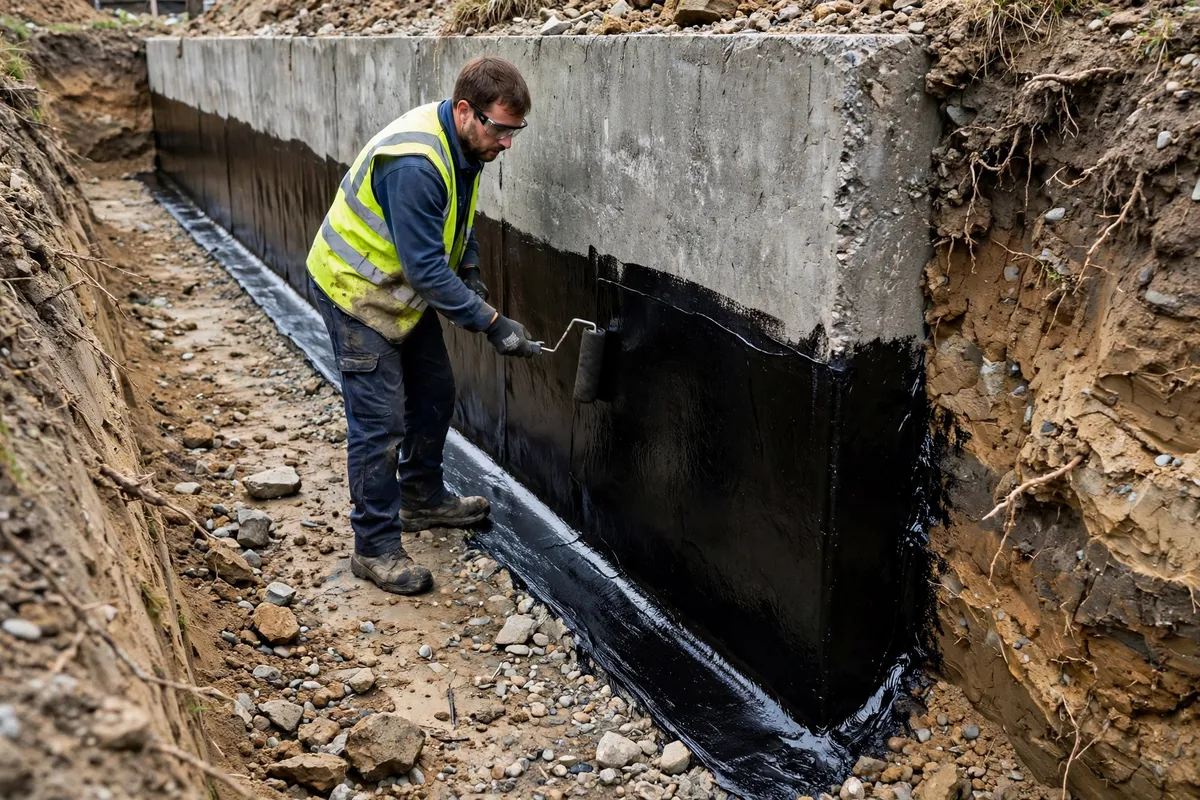
Excavating to the footing lets a contractor see the wall itself: cracks, failed old tar coatings and clogged or missing footing drains can all be fixed at once. The new membrane keeps water out of the wall, which matters most for finished basements where you don't want moisture inside the wall at all. Ask any contractor how they'll handle what's in the way, from decks and stoops to utility lines, and where the footing drain will discharge.
In Centerport, this ranks among the most frequent reasons homeowners call.
- Repeated seepage after interior fixes
- A failed tar or damp-proof coating seen during a previous dig
- Water entering at window wells or foundation penetrations
Gutter, Downspout and Grading Fixes in Centerport
A large share of basement leaks start at the roof. Every inch of rain on 1,000 square feet of roof produces roughly 600 gallons of water, and gutters that overflow or downspouts that empty at the foundation put that water right where it does the most harm. Downspout extensions that carry water 4 to 6 feet or more away, or buried lines to a dry well or the street where local rules allow, are often the simplest fix.
In Centerport, this ranks among the most frequent reasons homeowners call.
- Water stains below gutter seams
- Downspouts that end within a few feet of the foundation
- Basement leaks on the same side as a downspout
French Drain Installation in Centerport
A French drain is a gravel-filled trench with a perforated pipe that collects groundwater and surface water and carries it away from the house. Outside, it can intercept water on a slope before it reaches the foundation (often called a curtain drain), or it can run along the footing as a foundation drain. Inside, the same idea is used in an interior perimeter drain. Fabric wrapped around the pipe keeps soil from clogging it.
For Centerport homes, this is often one of the first things a pro will look at.
- A wet basement wall on only one side of the house
- Soggy lawn or erosion on the uphill side of the house
- Downspouts with nowhere to drain
Interior Waterproofing for Centerport Basements
Think of interior waterproofing as a pressure-relief system. Instead of trying to hold back saturated soil, it lets water reach a collection channel under the edge of the slab, where a perforated pipe carries it to a sump pit and the pump sends it outside. A wall membrane directs any seepage through the wall down behind the system rather than onto the floor. The work happens entirely inside, which keeps landscaping, driveways and neighboring property out of the picture.
- Efflorescence (white, chalky deposits) on block or concrete walls
- Water along the floor-wall joint after rain or snowmelt
- Peeling paint or bubbling wall coatings
Sump Pump Installation and Replacement in Centerport
Your sump pump is the last line of defense, so it pays to choose it carefully. A cast-iron or heavy-duty pump sized to the real inflow, a vertical or tethered float that can't snag on the pit wall, a check valve, a sealed lid and a discharge that ends well away from the foundation are the basics. A battery backup or water-powered backup covers storms that cut power, and an audible high-water alarm warns you before the floor gets wet.
- Water in the pit but the pump doesn't start
- The pump is more than seven to ten years old
- Loud grinding, rattling or humming
Leaking Basement Crack Repair in Centerport
Leaking cracks in poured walls are one of the most straightforward basement repairs. The crack is cleaned, sealed on the surface, and injected through ports so the material fills it from the inside face through to the soil side. Flexible polyurethane stops water and tolerates small seasonal movement; rigid epoxy restores strength where that's needed. If the crack is in a block wall, or it's wide, offset or getting worse, have its cause checked before relying on a seal alone.
- Rust stains coming from a crack (a sign of corroding rebar or wall ties)
- A crack that has been patched and leaks again
- Damp streaks or efflorescence along a crack
Other Waterproofing Services
Pros serving Centerport also handle basement humidity control, crawl space encapsulation, backwater valves and sewer backup protection. These come up less often locally but follow the same approach: find the source, then fix it.
Before You Call: What to Check
- Check your sump pump, if you have one, and note how often it runs.
- Take photos of wet areas, cracks and stains, with dates.
- Note when water appears: during rain, a day later, during snowmelt, or only in humid weather.
- Note any musty smells or mold on stored items.
How Local Pros Typically Handle the Job
- Inspection. Expect questions about when the water shows up, plus a walk around the outside of the house to check gutters, grading and window wells.
- Diagnosis. A clear explanation of the cause should come before any recommendation, so you know why a given system is being proposed.
- Recommendation. The proposal should spell out the system, its length, the sump and discharge, and what's excluded.
- Installation and follow-up. After installation, the system is tested and you're shown how to maintain the sump and keep drains clear.
Centerport Waterproofing FAQ
How often should a sump pump be checked in Centerport?
Test it a few times a year by pouring water into the pit until the float lifts, and before the wet season. Check the discharge line in winter to make sure it isn't frozen or blocked. Many pumps last roughly seven to ten years.
Do I need interior or exterior waterproofing for my Centerport home?
Interior drainage with a sump manages water that reaches the wall and is the more common choice where lots are small or hardscape surrounds the house. Exterior waterproofing stops water at the outside face of the wall and suits finished basements and larger lots. A pro should explain which fits your home after inspecting it.
How do I know whether water in my Centerport basement is groundwater or runoff?
Watch the timing. Water that appears during or right after rain, on the side of the house where a downspout empties, usually traces to roof runoff or grading. Water that seeps at the floor-wall joint a day or more after rain, or during snowmelt, points to groundwater pressure. Exterior drainage and regrading are often practical on North Shore lots, which are usually larger than those on the South Shore.
Dawn Waterproofing connects homeowners with independent local service providers and does not perform the work. Availability, licensing, pricing and scheduling are set by the provider you speak with.