Local Conditions That Affect Waterproofing in Centereach
Most homes are postwar and later: capes, ranches, high-ranches and colonials from the 1950s through the 1990s, many with basements finished decades after the house was built. Winter freeze-thaw cycles can open small cracks in poured walls and slabs over time.
Because the ground drains well, basement water here more often traces to roof runoff, gutters, grading or a high seasonal water table than to the soil itself. Central Suffolk spans the Ronkonkoma moraine and the sandy outwash plain south of it, and its soils are among the fastest-draining on Long Island.
What that means for waterproofing in practice: Where the seasonal water table rises, interior drainage with a sump is the common long-term fix. Basement windows and bulkhead doors are frequent leak points in homes from the 1960s and '70s.
This page covers Centereach, ZIP code 11720. Point every downspout at least 4 to 6 feet away from the house; in sandy soil that alone often keeps a basement dry.
Types of Waterproofing Services for Centereach Homes
The sections below are ordered by how often each issue comes up in homes like those around Centereach. Each one explains what the work involves and the signs that suggest you may need it.
Gutter, Downspout and Grading Fixes in Centereach
The ground should slope away from the house, ideally about 6 inches over the first 10 feet. Over the years, soil settles around foundations, flower beds get built up against the siding, and patios and walks sink toward the house, reversing the slope. Restoring the grade, raising low spots with clean fill and pitching hardscapes away from the wall costs far less than drainage systems and is often the first thing a good contractor checks.
Given local conditions in central Suffolk County, this is one of the more common requests in Centereach.
- Gutters that overflow in heavy rain
- Water stains below gutter seams
- Erosion trenches under the drip line
Interior Waterproofing for Centereach Basements
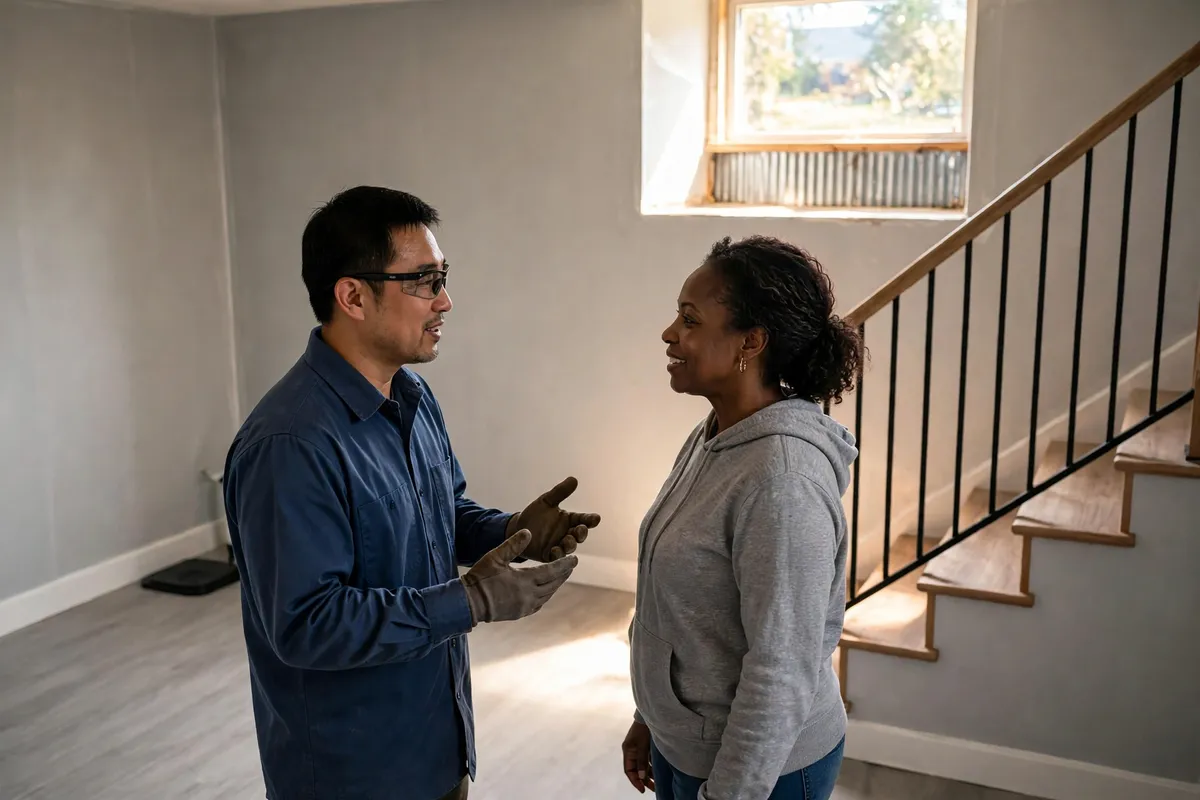
If water shows up where the floor meets the wall, the cause is usually hydrostatic pressure from saturated soil pushing water through the joint and the porous concrete or block. An interior drainage system relieves that pressure by giving the water an easy path to a sump instead of across your floor. It doesn't make the wall itself watertight, so it's typically paired with a vapor barrier on the walls and, where the air stays humid, a dehumidifier.
For Centereach homes, this is often one of the first things a pro will look at.
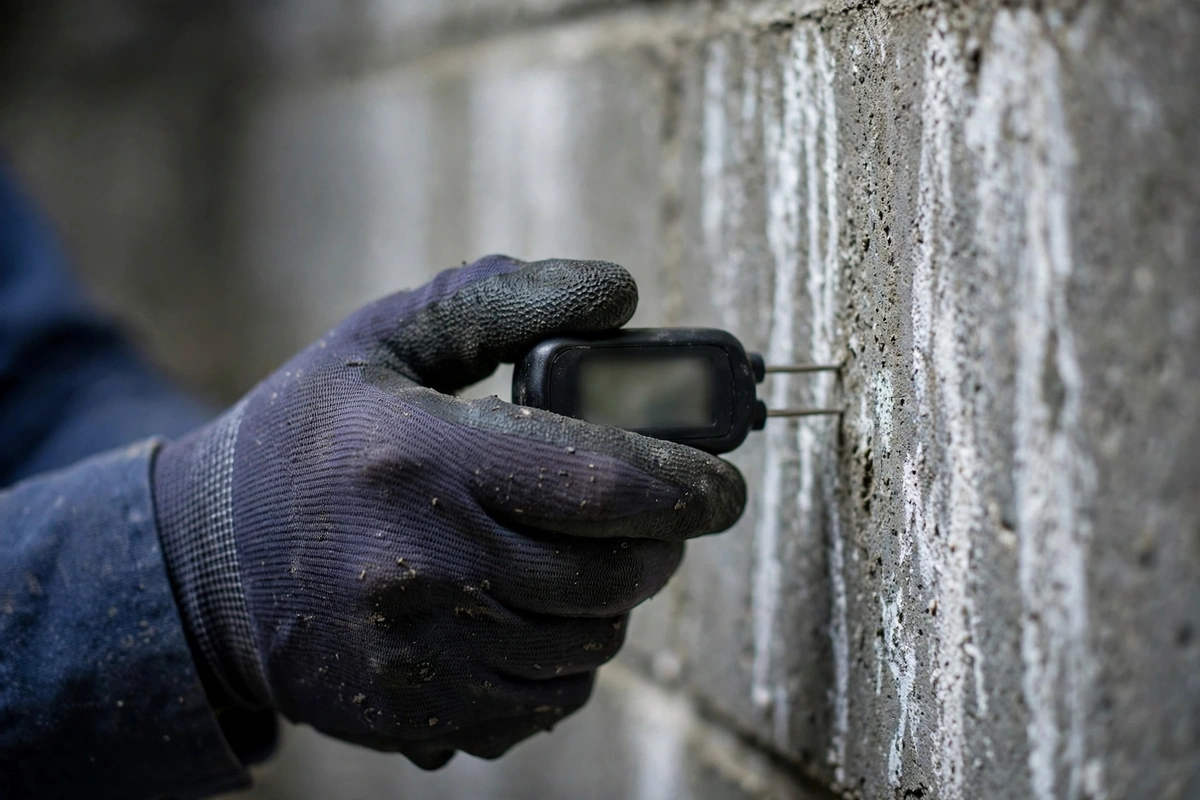
- Efflorescence (white, chalky deposits) on block or concrete walls
- Water along the floor-wall joint after rain or snowmelt
- A musty smell that comes back after cleaning
Sump Pump Installation and Replacement in Centereach
Your sump pump is the last line of defense, so it pays to choose it carefully. A cast-iron or heavy-duty pump sized to the real inflow, a vertical or tethered float that can't snag on the pit wall, a check valve, a sealed lid and a discharge that ends well away from the foundation are the basics. A battery backup or water-powered backup covers storms that cut power, and an audible high-water alarm warns you before the floor gets wet.
In Centereach, this ranks among the most frequent reasons homeowners call.
- Water in the pit but the pump doesn't start
- Loud grinding, rattling or humming
- Water around the pit after a power outage
Foundation Crack Sealing in Centereach
Leaking cracks in poured walls are one of the most straightforward basement repairs. The crack is cleaned, sealed on the surface, and injected through ports so the material fills it from the inside face through to the soil side. Flexible polyurethane stops water and tolerates small seasonal movement; rigid epoxy restores strength where that's needed. If the crack is in a block wall, or it's wide, offset or getting worse, have its cause checked before relying on a seal alone.
- Rust stains coming from a crack (a sign of corroding rebar or wall ties)
- Leaks around pipe or tie-rod penetrations
- Damp streaks or efflorescence along a crack
French Drains and Yard Drainage in Centereach
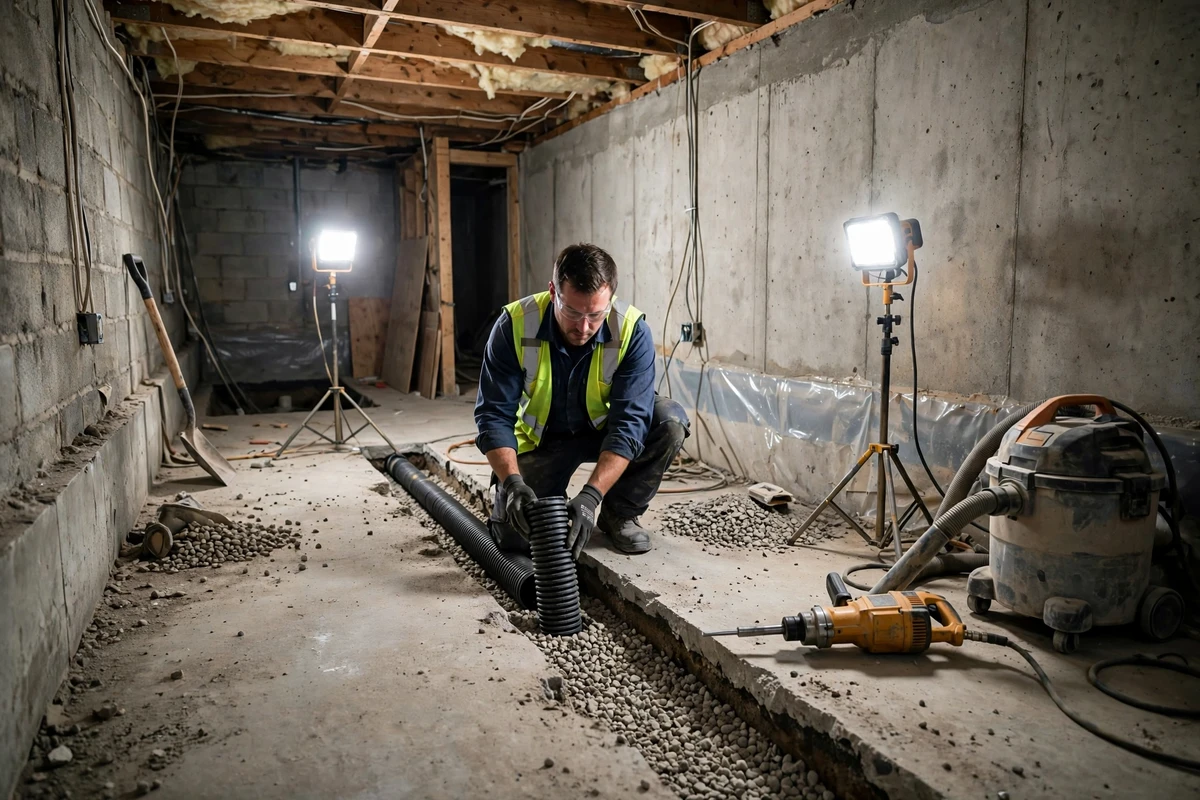
A French drain is a gravel-filled trench with a perforated pipe that collects groundwater and surface water and carries it away from the house. Outside, it can intercept water on a slope before it reaches the foundation (often called a curtain drain), or it can run along the footing as a foundation drain. Inside, the same idea is used in an interior perimeter drain. Fabric wrapped around the pipe keeps soil from clogging it.
- Puddles that stay near the foundation for a day or more after rain
- Mulch or soil washing away from beds along the foundation
- A wet basement wall on only one side of the house
Exterior Foundation Waterproofing in Centereach
Exterior waterproofing stops water at the outside face of the foundation. The soil is excavated down to the footing, the wall is cleaned and repaired, a waterproof membrane is applied, a drainage board goes over it, and a footing drain carries collected water to a sump or a daylight outlet before the trench is backfilled. It is the most thorough fix for a leaking wall, but also the most disruptive and usually the most expensive, because it means digging up plantings, walkways and sometimes part of a driveway.
- Leaks through the middle of the wall, not just at the floor joint
- Planning to finish the basement and wanting dry walls
- Repeated seepage after interior fixes
Other Waterproofing Services
Pros serving Centereach also handle basement humidity control, crawl space encapsulation, backwater valves and sewer backup protection. These come up less often locally but follow the same approach: find the source, then fix it.
Before You Call: What to Check
- Check your sump pump, if you have one, and note how often it runs.
- Take photos of wet areas, cracks and stains, with dates.
- Note any musty smells or mold on stored items.
- Note when water appears: during rain, a day later, during snowmelt, or only in humid weather.
How Local Pros Typically Handle the Job
- Inspection. The pro looks at where and when water appears, checks gutters, downspouts and grading outside, and inspects walls, floor joints and cracks inside.
- Diagnosis. They explain the likely source, whether surface runoff, groundwater pressure, a high water table, condensation or a sewer backup.
- Recommendation. The proposal should spell out the system, its length, the sump and discharge, and what's excluded.
- Installation and follow-up. Work is scheduled, completed and tested, and you get maintenance guidance for the sump and drains.
Centereach Waterproofing FAQ
Can I waterproof a finished basement in Centereach without tearing it out?
Sometimes. Exterior waterproofing works from outside, and some interior systems can be installed by removing only the lower part of the finished wall. A pro will need to see where water is entering first.
Why does my Centereach basement smell musty even when the floor is dry?
Humid summer air condenses on cool basement walls and floors, and moisture can wick through concrete without visible water. A hygrometer reading above about 60 percent humidity is a sign the air needs drying. Basement windows and bulkhead doors are frequent leak points in homes from the 1960s and '70s.
How often should a sump pump be checked in Centereach?
Test it a few times a year by pouring water into the pit until the float lifts, and before the wet season. Check the discharge line in winter to make sure it isn't frozen or blocked. Many pumps last roughly seven to ten years.
Dawn Waterproofing connects homeowners with independent local service providers and does not perform the work. Availability, licensing, pricing and scheduling are set by the provider you speak with.