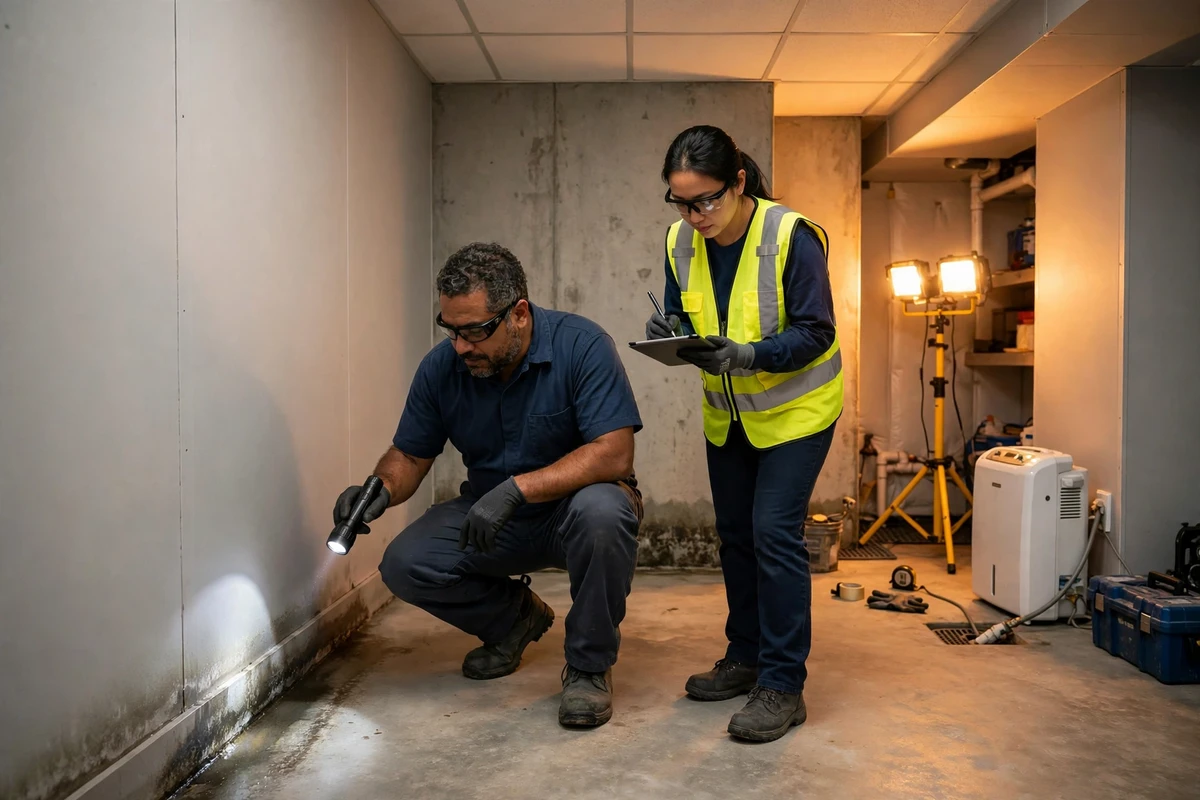
What Drives Basement Water: Waterproofing in Farmingville
Because the ground drains well, basement water here more often traces to roof runoff, gutters, grading or a high seasonal water table than to the soil itself. Winter freeze-thaw cycles can open small cracks in poured walls and slabs over time.
Central Suffolk spans the Ronkonkoma moraine and the sandy outwash plain south of it, and its soils are among the fastest-draining on Long Island. Many central Suffolk homes still use cesspools or septic systems rather than sewers, and a saturated or failing system can send water toward a basement.
What that means for waterproofing in practice: Gutter and downspout fixes and better grading often solve basement seepage in sandy central Suffolk soils. Basement windows and bulkhead doors are frequent leak points in homes from the 1960s and '70s.
This page covers Farmingville, ZIP code 11738. Point every downspout at least 4 to 6 feet away from the house; in sandy soil that alone often keeps a basement dry.
Waterproofing Services Available in Farmingville
The sections below are ordered by how often each issue comes up in homes like those around Farmingville. Each one explains what the work involves and the signs that suggest you may need it.
Gutter, Downspout and Grading Fixes in Farmingville
The ground should slope away from the house, ideally about 6 inches over the first 10 feet. Over the years, soil settles around foundations, flower beds get built up against the siding, and patios and walks sink toward the house, reversing the slope. Restoring the grade, raising low spots with clean fill and pitching hardscapes away from the wall costs far less than drainage systems and is often the first thing a good contractor checks.
In Farmingville, this ranks among the most frequent reasons homeowners call.
- Basement leaks on the same side as a downspout
- Water stains below gutter seams
- Gutters that overflow in heavy rain
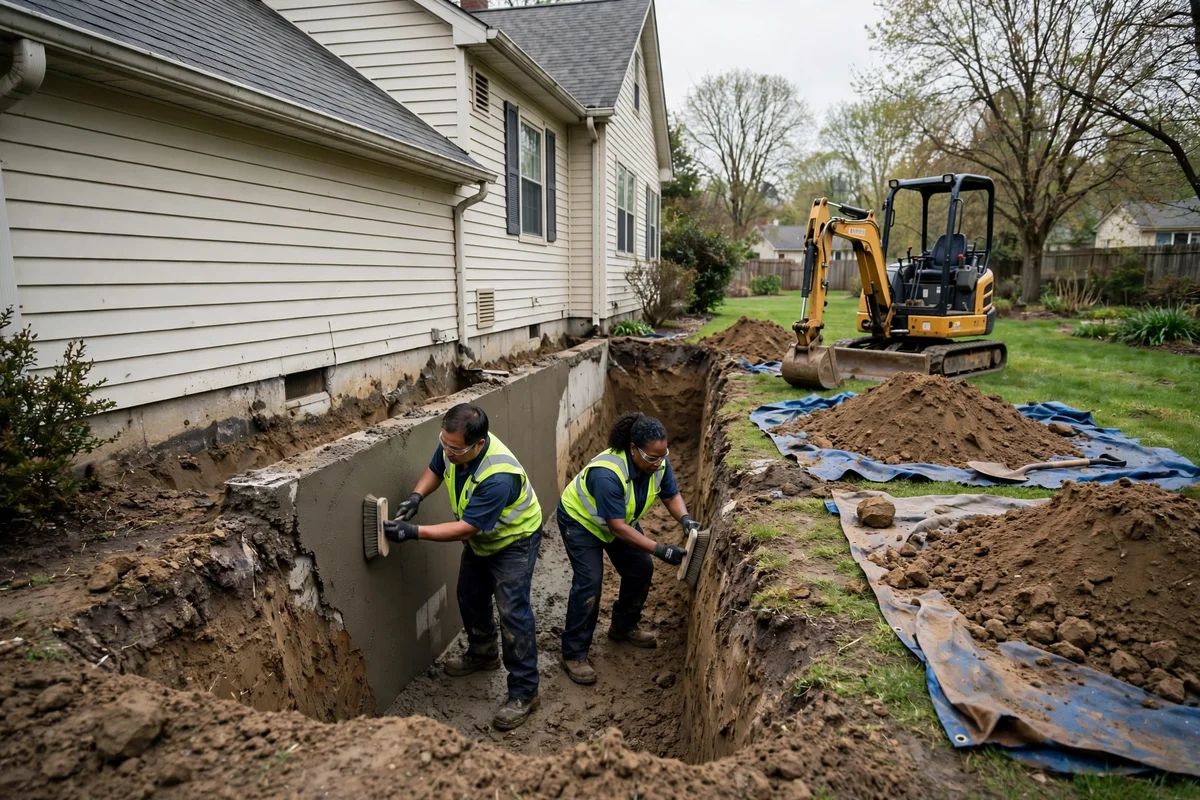
Interior Waterproofing for Farmingville Basements
Interior waterproofing manages water that has already reached the foundation instead of trying to stop it at the outside face of the wall. The usual system is a perforated drain laid in a channel cut along the inside perimeter of the floor, a dimpled membrane or wall panel that guides seepage down into that drain, and a sump that pumps the water out. Because nothing outside the house is dug up, it's the approach most often used where yards are small, driveways and patios abut the house, or neighboring buildings are close.
In Farmingville, this ranks among the most frequent reasons homeowners call.
- Efflorescence (white, chalky deposits) on block or concrete walls
- A musty smell that comes back after cleaning
- Water along the floor-wall joint after rain or snowmelt
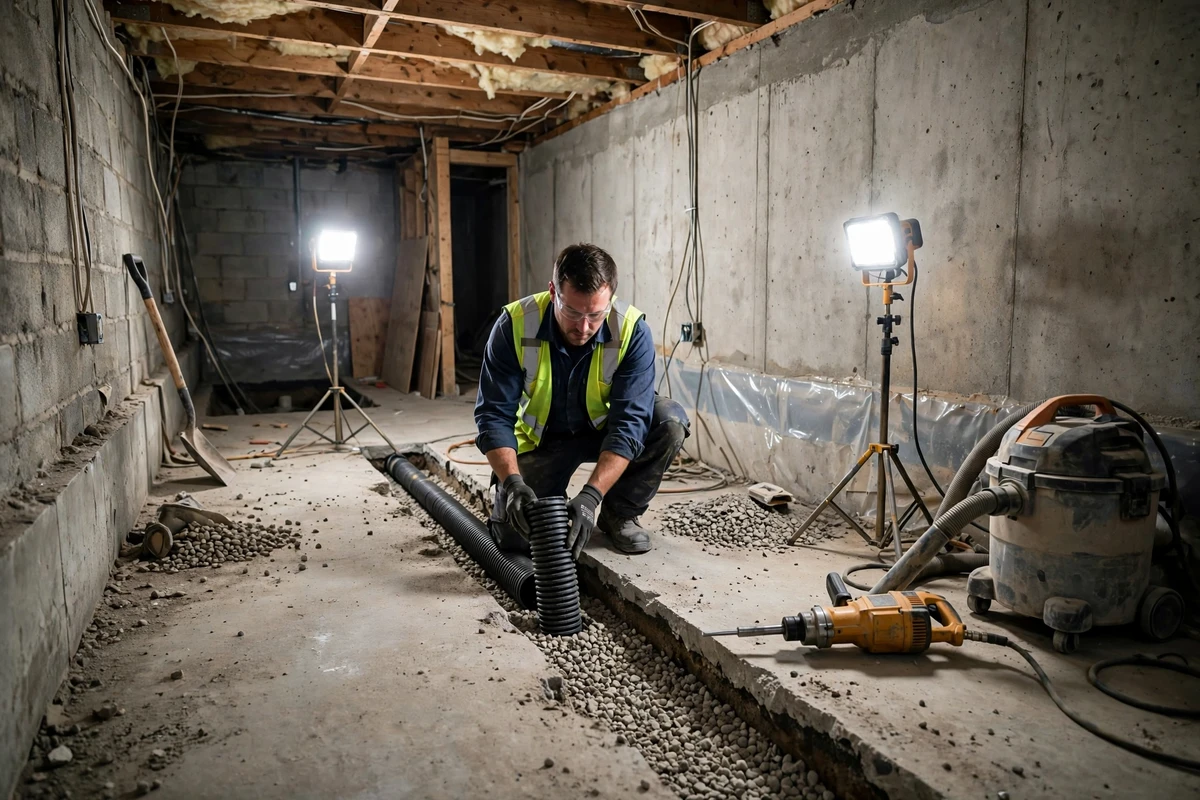
Sump Pump Installation and Replacement in Farmingville
Most sump failures happen for simple reasons: a stuck float switch, a clogged intake, a frozen or crushed discharge line, or a pump that has simply reached the end of its life. Many pumps last roughly seven to ten years depending on use. A sealed lid keeps out debris and reduces humidity and odors, and a water alarm can warn you when the water rises before it reaches the floor.
For Farmingville homes, this is often one of the first things a pro will look at.
- Water around the pit after a power outage
- The pump runs constantly or cycles on and off rapidly
- Water in the pit but the pump doesn't start
Foundation Crack Sealing in Farmingville
Most poured concrete walls develop thin vertical shrinkage cracks as the concrete cures, and a crack that lets water in can usually be sealed from inside by injecting it under low pressure. Polyurethane foam expands to fill the crack and stays flexible, which suits leaks; epoxy bonds the two sides together and is used when structural strength matters. Either way, the crack should be injected through its full depth, not just covered on the surface.
- A crack that has been patched and leaks again
- Damp streaks or efflorescence along a crack
- Leaks around pipe or tie-rod penetrations
French Drains and Yard Drainage in Farmingville
Yard drainage covers the whole path water takes across your property: where it pools after a storm, where downspouts discharge, and where it leaves the lot. Catch basins, channel drains across driveways, dry wells and French drains can each solve a different part of the problem. A good contractor will look at where water collects during a real rain before recommending one of them.
- Puddles that stay near the foundation for a day or more after rain
- Downspouts with nowhere to drain
- Mulch or soil washing away from beds along the foundation
Exterior Waterproofing for Farmingville Homes
Excavating to the footing lets a contractor see the wall itself: cracks, failed old tar coatings and clogged or missing footing drains can all be fixed at once. The new membrane keeps water out of the wall, which matters most for finished basements where you don't want moisture inside the wall at all. Ask any contractor how they'll handle what's in the way, from decks and stoops to utility lines, and where the footing drain will discharge.
- Wet wall cavities behind finished drywall
- Water entering at window wells or foundation penetrations
- Repeated seepage after interior fixes
Other Waterproofing Services
Pros serving Farmingville also handle basement humidity control, crawl space encapsulation, backwater valves and sewer backup protection. These come up less often locally but follow the same approach: find the source, then fix it.
Before You Call: What to Check
- Note when water appears: during rain, a day later, during snowmelt, or only in humid weather.
- Note any musty smells or mold on stored items.
- Check your sump pump, if you have one, and note how often it runs.
- Take photos of wet areas, cracks and stains, with dates.
How Local Pros Typically Handle the Job
- Inspection. Expect questions about when the water shows up, plus a walk around the outside of the house to check gutters, grading and window wells.
- Diagnosis. A clear explanation of the cause should come before any recommendation, so you know why a given system is being proposed.
- Recommendation. The proposal should spell out the system, its length, the sump and discharge, and what's excluded.
- Installation and follow-up. Work is scheduled, completed and tested, and you get maintenance guidance for the sump and drains.
Farmingville Waterproofing FAQ
How do I know whether water in my Farmingville basement is groundwater or runoff?
Watch the timing. Water that appears during or right after rain, on the side of the house where a downspout empties, usually traces to roof runoff or grading. Water that seeps at the floor-wall joint a day or more after rain, or during snowmelt, points to groundwater pressure. Basement windows and bulkhead doors are frequent leak points in homes from the 1960s and '70s.
How often should a sump pump be checked in Farmingville?
Test it a few times a year by pouring water into the pit until the float lifts, and before the wet season. Check the discharge line in winter to make sure it isn't frozen or blocked. Many pumps last roughly seven to ten years.
Can I waterproof a finished basement in Farmingville without tearing it out?
Sometimes. Exterior waterproofing works from outside, and some interior systems can be installed by removing only the lower part of the finished wall. A pro will need to see where water is entering first.
Dawn Waterproofing connects homeowners with independent local service providers and does not perform the work. Availability, licensing, pricing and scheduling are set by the provider you speak with.