Common Causes of Water Damage in Blue Point
Blue Point lies on the Great South Bay, with low-lying streets near the bayfront.
Salt air and occasional saltwater flooding speed up corrosion of fasteners, ductwork and equipment in crawl spaces. Housing near the water ranges from small summer bungalows converted to year-round homes to raised houses built to current flood codes.
Hurricane Sandy's 2012 surge flooded waterfront communities along this shore, from Lindenhurst and Babylon east to Mastic Beach, and many homes were elevated afterward. Bulkheads along the canals hold back the water; when they fail, the ground behind them can erode and settle.
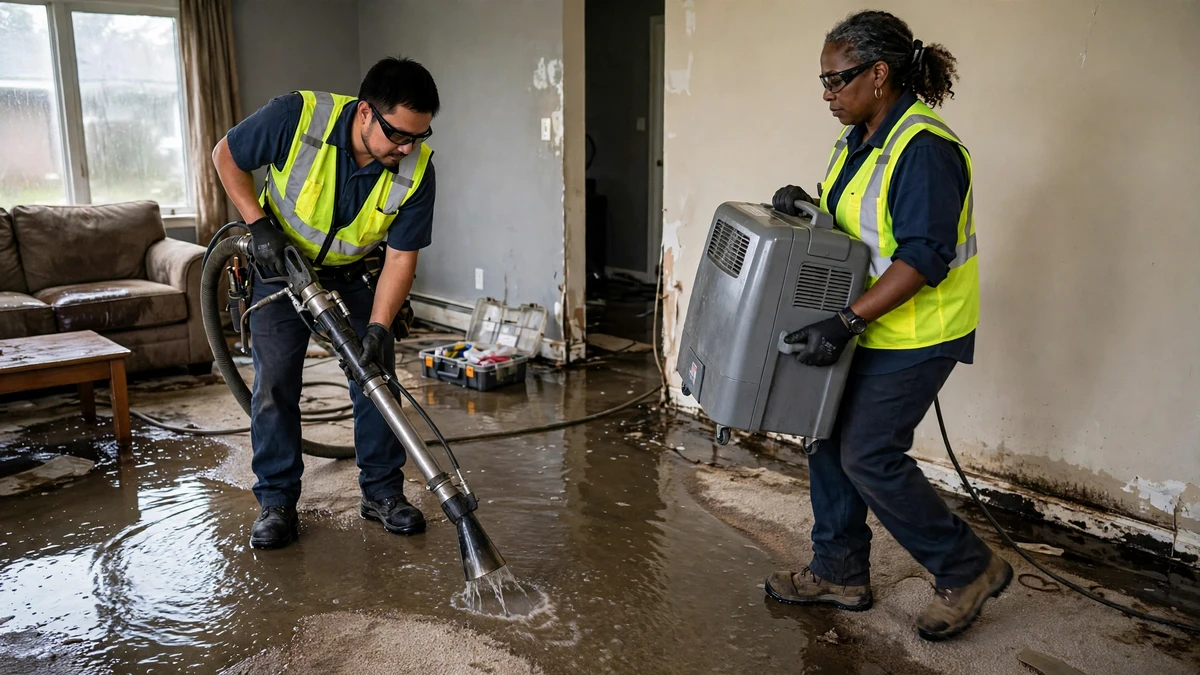
What that means for water damage in practice: Mold grows quickly in humid bayfront air if drying is delayed. Storm-tide flooding brings salt water and debris, so cleanup includes washing and drying framing, not just extraction.
This page covers Blue Point, ZIP code 11715. Watch for water at the base of walls after full-moon high tides; it's an early sign the water table is reaching your foundation.
Water Damage Restoration Services in Blue Point
The sections below are ordered by how often each issue comes up in homes like those around Blue Point. Each one explains what the work involves and the signs that suggest you may need it.
Basement Flood Cleanup in Blue Point
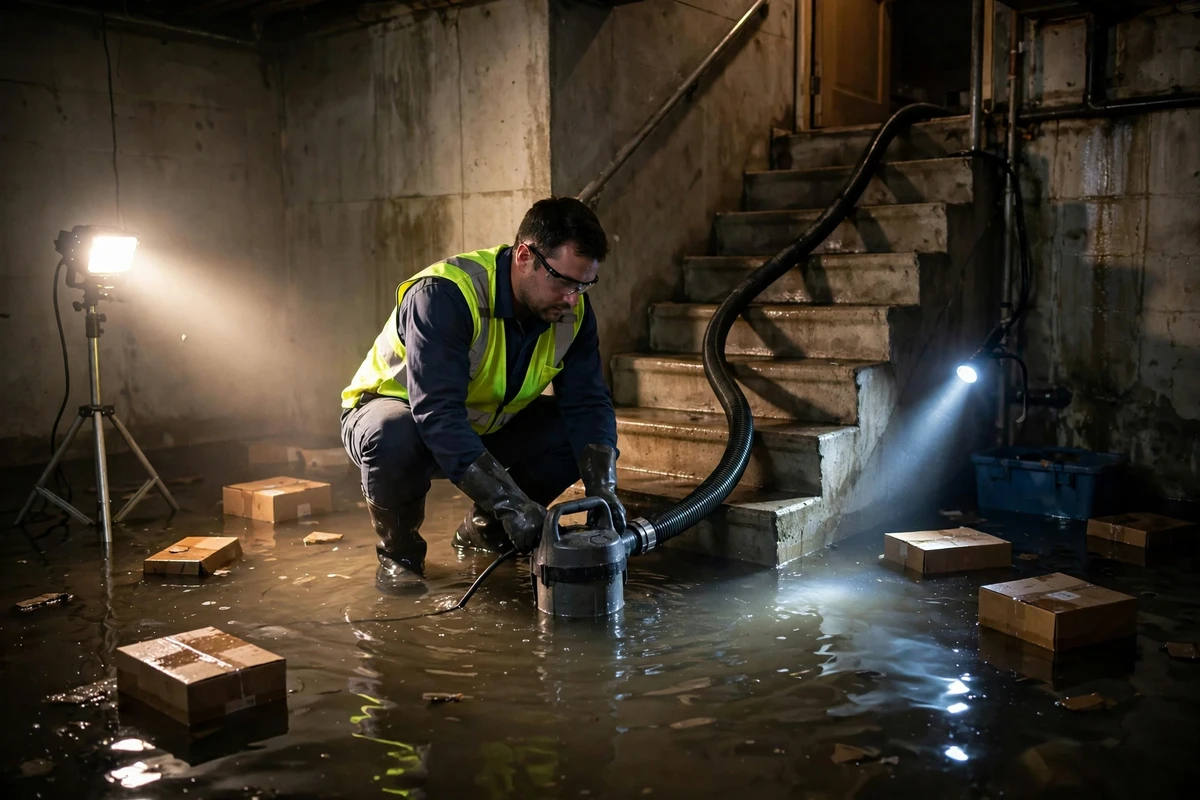
Cleaning up a flooded basement means more than pumping out water. Mud and debris need to be removed, wet porous materials taken out, surfaces cleaned and disinfected, and the space dried with professional equipment. Drywall is commonly cut a foot or two above the water line so the wall cavity can dry. Furnaces, water heaters and electrical equipment that sat in water should be checked by qualified technicians before they're used again.
In Blue Point, this ranks among the most frequent reasons homeowners call.
- Mud or debris left after the water recedes
- Water entering through walls or the floor
- Standing water in the basement
Storm Water Damage Cleanup in Blue Point
Ice dams form when heat escaping through the roof melts snow, which refreezes at the cold eaves and backs water up under the shingles. The water can show up as ceiling stains or wet walls far from the eaves. Removing snow from the roof edge, improving attic insulation and ventilation, and sealing air leaks reduce ice dams in future winters.
For Blue Point homes, this is often one of the first things a pro will look at.
- Ceiling stains after storms or snowmelt
- Damaged shingles or flashing
- Wet walls below windows
Emergency Water Extraction in Blue Point
Before anyone walks into standing water, the power to that area should be shut off at the panel if you can reach it safely. Once the water is out, technicians remove wet carpet pad, which rarely dries properly in place, and check for moisture that has wicked into walls and under flooring. Thorough extraction shortens drying time and reduces the risk of mold.
In Blue Point, this ranks among the most frequent reasons homeowners call.
- Soaked carpet and pad
- A finished basement that has flooded
- Water that has spread under walls into other rooms
Water Damage Drying in Blue Point
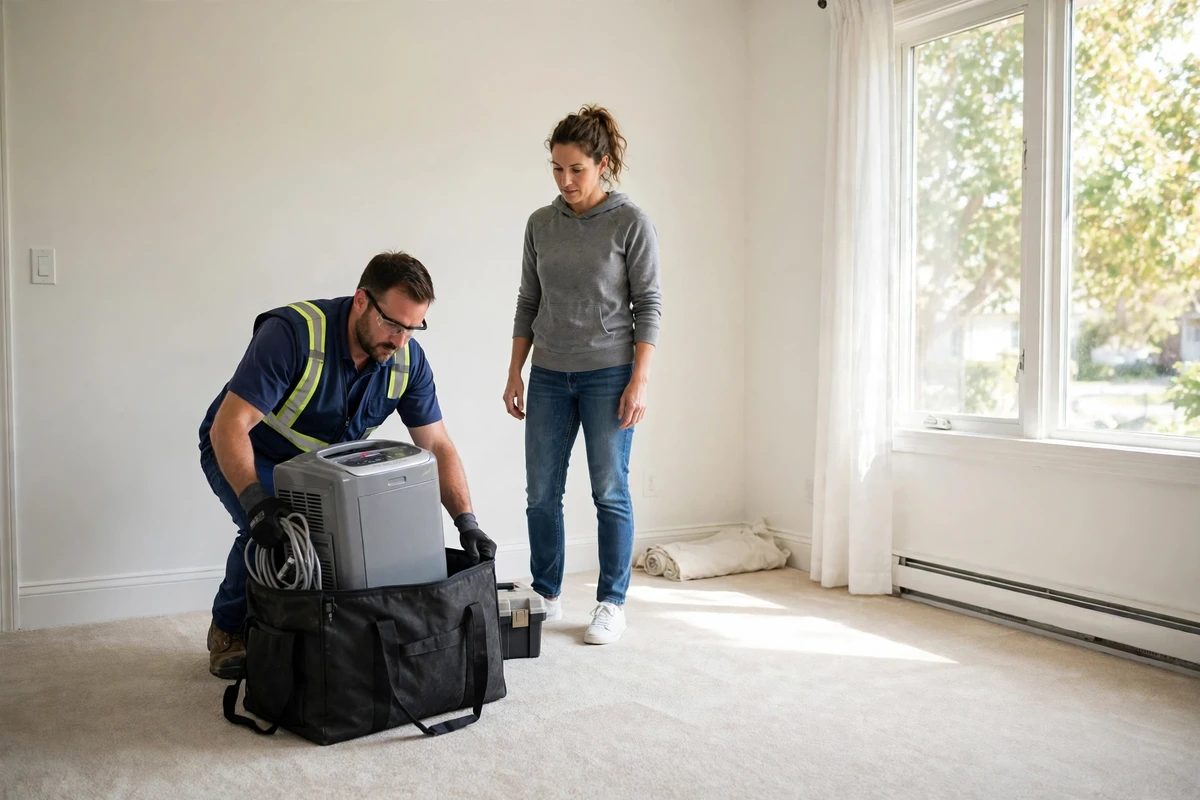
Removing visible water is only the start. Drywall, framing, subfloors and concrete absorb water and can stay wet for weeks without professional drying. Restoration crews set up air movers to move air across wet surfaces and commercial dehumidifiers to pull moisture out of the air, and they measure moisture in materials each day until readings return to normal. Drying usually takes three to five days, depending on materials and conditions.
- Wet insulation behind walls
- Damp drywall or baseboards after the water is gone
- High humidity in the affected area
Mold Remediation After Water Damage in Blue Point
Small areas of surface mold on hard surfaces can sometimes be cleaned by homeowners, but larger areas, mold inside walls, and mold after sewage or flood water should be handled by professionals. Testing is not always necessary when mold is visible; what matters is removing it and fixing the moisture problem. New York State requires licensed mold assessors and remediators for projects over 10 square feet.
- Water damage that wasn't dried within two days
- Mold after a flood or sewage backup
- Discolored drywall or baseboards
Water Damage Documentation and Contents in Blue Point
Insurance coverage depends on the source of the water. Sudden and accidental water from a burst pipe or appliance is commonly covered by homeowners policies; surface flooding is covered by flood insurance; sewer backup often requires a separate rider; long-term leaks and seepage are often excluded. Call your insurer promptly and ask before throwing away damaged items.
- Documents and photos that got wet
- Uncertainty about what your policy covers
- Items that need professional cleaning or drying
Other Water Damage Services
Pros serving Blue Point also handle burst and frozen pipe water damage, sewage backup cleanup, ceiling and drywall water damage. These come up less often locally but follow the same approach: find the source, then fix it.
Before You Call: What to Check
- Photograph damage before moving items.
- Move valuables and documents to a dry area.
- Turn off power to wet areas only if you can do it without standing in water.
- Call your insurance company to start a claim.
How Local Pros Typically Handle the Job
- Emergency response. First, the water source is shut off, the area is made safe and standing water is removed.
- Assessment. Technicians trace where water traveled inside walls and floors and classify how contaminated it is.
- Removal and drying. Unsalvageable materials are removed, and air movers and dehumidifiers dry the structure with daily readings.
- Documentation and repair. Photos, readings and item lists are compiled for insurance, and repairs can begin once dry.
Blue Point Water Damage FAQ
What should I do first after water damage in Blue Point?
Stop the water at the main shut-off if it's a plumbing leak, make the area safe, photograph the damage and call your insurer. Extraction and drying should start as soon as possible, because mold can begin within 24 to 48 hours. Mold grows quickly in humid bayfront air if drying is delayed.
How do I know if water got inside my walls in Blue Point?
Look for stains, bubbling paint, soft drywall and swollen baseboards, and notice musty smells. Moisture meters and thermal cameras show where water spread behind surfaces.
Can I clean up water damage in my Blue Point home myself?
Small spills of clean water that are dried within a day can often be handled with fans and a dehumidifier. Larger leaks, water inside walls or under floors, flood water and sewage should be handled by professionals with extraction and drying equipment. Mold grows quickly in humid bayfront air if drying is delayed.
Dawn Waterproofing connects homeowners with independent local service providers and does not perform the work. Availability, licensing, pricing and scheduling are set by the provider you speak with.