Common Causes of Water Damage in Bayside
Bayside sits along Little Neck Bay, with hilly streets that send storm runoff toward lower blocks near the water.
Most of Queens drains to a combined sewer system, where rainwater and household wastewater share the same pipes. During a cloudburst those pipes can surcharge, and the lowest fixture in a building, often a basement floor drain, becomes the overflow point. The remnants of Hurricane Ida in September 2021 showed how fast this can happen: water poured into below-grade rooms across Queens within minutes, and basement apartments were hit hardest.
Older cast-iron and clay sewer laterals in pre-war blocks can crack or settle, which makes backups more likely even in moderate storms. Shared walls mean a leak or flood next door can show up as stains, efflorescence or damp drywall on your side.
What that means for water damage in practice: Document everything with photos before cleanup starts; flood and sewer-backup coverage are often separate riders on a homeowners policy. In a two-family or rental basement, fast extraction limits damage to tenants' belongings and to the unit above.
This page covers Bayside, ZIP code 11359. When a severe thunderstorm warning is issued, move valuables off the basement floor and keep a plug or test cap for the floor drain within reach.
Water Damage Cleanup Services for Bayside Homes
Start with the first few sections: they cover the problems most often reported around Bayside. Each includes what the work involves and the signs to watch for.
Sewer Backup Cleanup in Bayside
Sewer backups usually happen during heavy rain when public sewers surcharge, or when roots, grease or a collapsed pipe block the line from the house. After cleanup, a plumber can camera-inspect the sewer lateral and discuss a backwater valve. Many homeowners policies exclude sewer backup unless a specific rider was added, so check your coverage.
In Bayside, this ranks among the most frequent reasons homeowners call.
- Backups during heavy rain
- Gurgling drains
- Multiple fixtures backing up at once
Flooded Basement Cleanup in Bayside
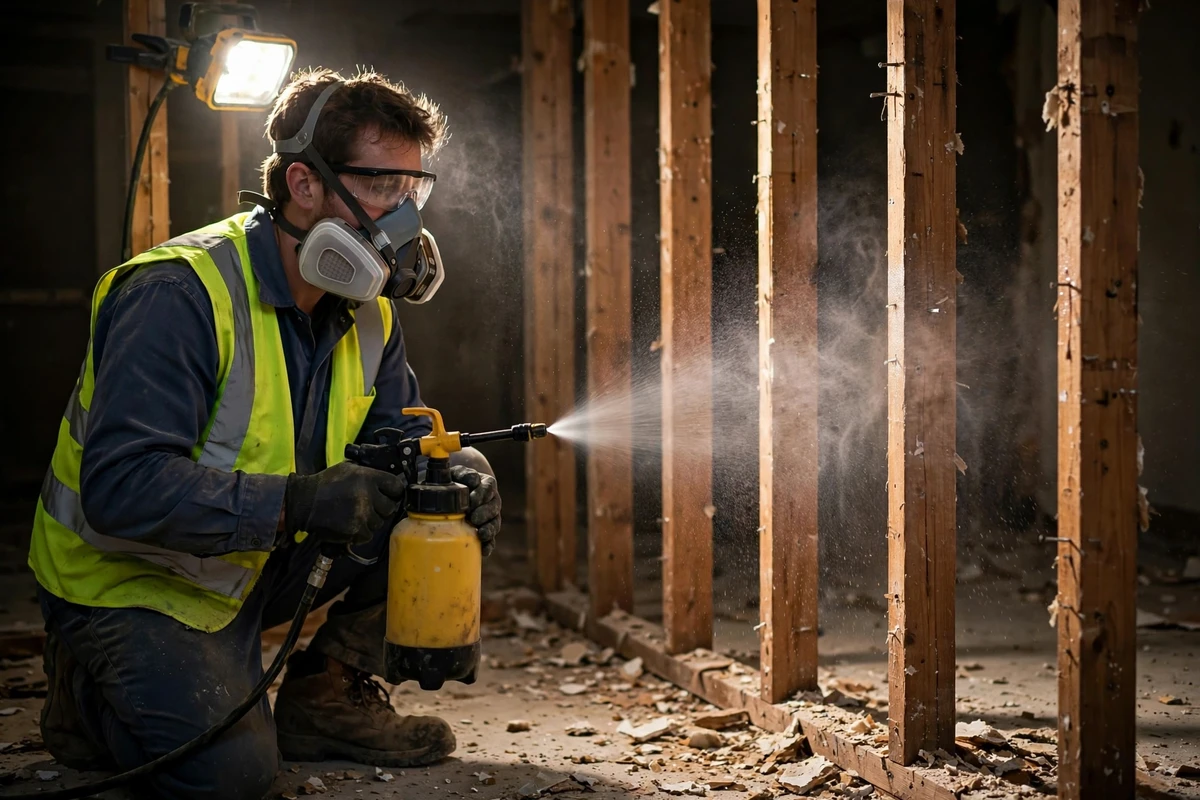
Cleaning up a flooded basement means more than pumping out water. Mud and debris need to be removed, wet porous materials taken out, surfaces cleaned and disinfected, and the space dried with professional equipment. Drywall is commonly cut a foot or two above the water line so the wall cavity can dry. Furnaces, water heaters and electrical equipment that sat in water should be checked by qualified technicians before they're used again.
In Bayside, this ranks among the most frequent reasons homeowners call.
- A failed sump pump
- Water entering through walls or the floor
- Soaked carpet, drywall or stored items
Standing Water Removal in Bayside
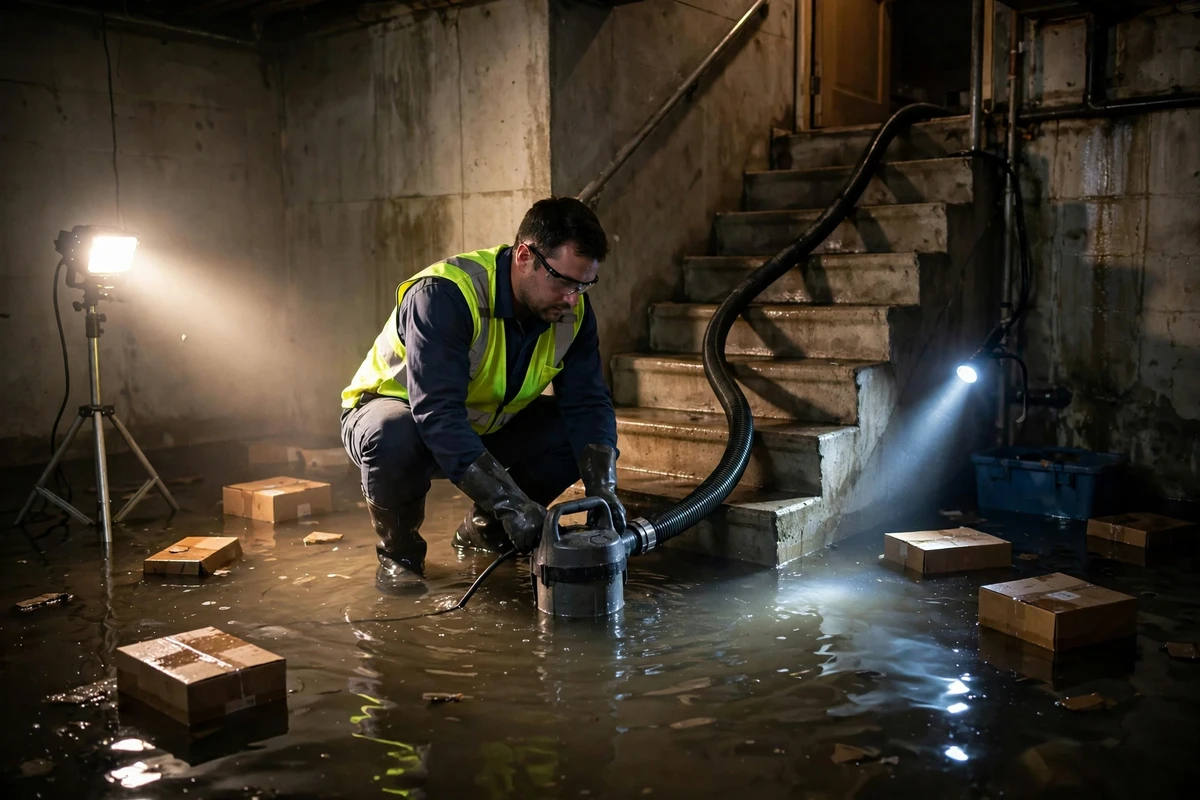
Before anyone walks into standing water, the power to that area should be shut off at the panel if you can reach it safely. Once the water is out, technicians remove wet carpet pad, which rarely dries properly in place, and check for moisture that has wicked into walls and under flooring. Thorough extraction shortens drying time and reduces the risk of mold.
Given local conditions in Queens, this is one of the more common requests in Bayside.
- Soaked carpet and pad
- Standing water on floors
- Water that has spread under walls into other rooms
Structural Drying and Dehumidification in Bayside
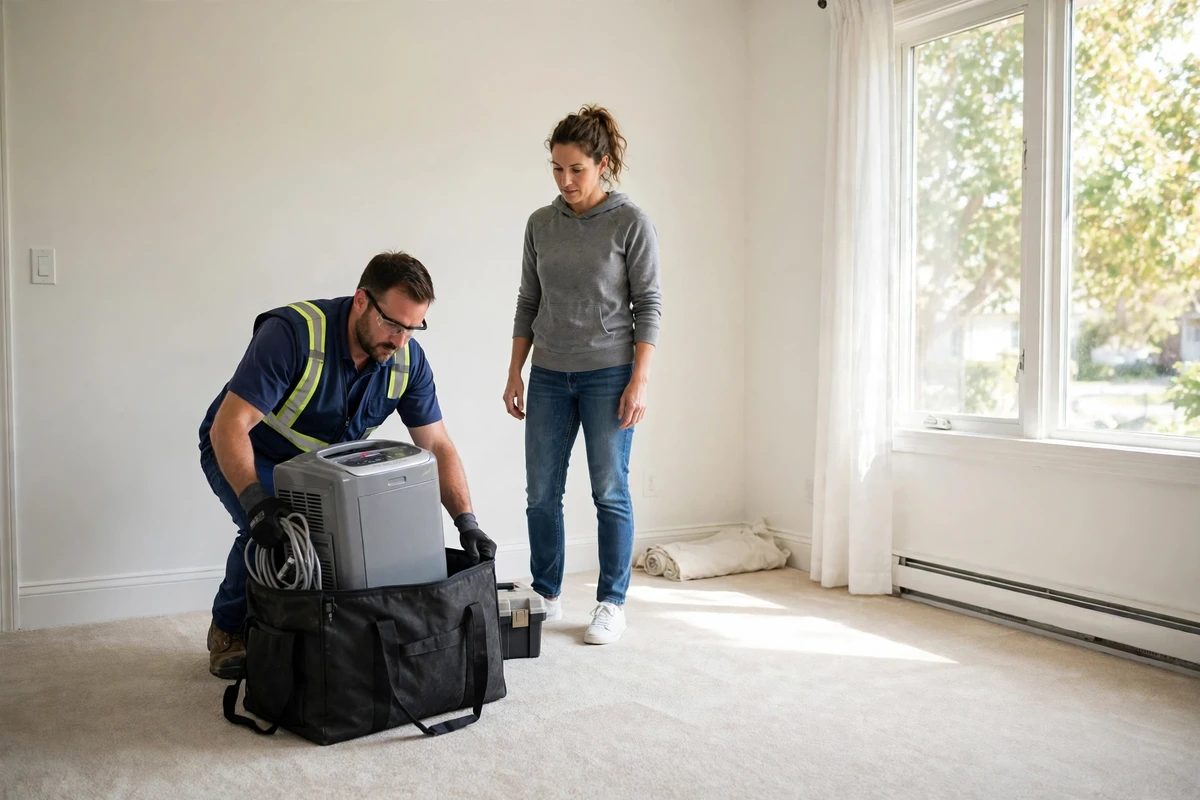
Drying a house is a measured process. Air movers push dry air across wet surfaces, commercial dehumidifiers pull the moisture out of the air, and technicians check moisture levels in walls, floors and framing each day. Equipment is moved or removed as areas dry. When drying is documented this way, you and your insurer have a record showing the structure is dry before walls are closed up and floors are replaced.
- Musty smell a few days after a leak
- Swollen or cupping wood flooring
- Wet insulation behind walls
Burst Pipe Water Damage Cleanup in Bayside
A burst pipe releases clean water, but if it isn't dried quickly it can still lead to mold and damage to drywall, flooring and ceilings below. Water from upper floors often travels down inside walls and shows up far from the break. After extraction and drying, a plumber should repair the pipe and look at whether insulation, heat tape or rerouting is needed so it doesn't freeze again.
- Water spraying or dripping from a pipe
- The sound of running water when nothing is on
- A sudden drop in water pressure in winter
Mold Remediation After Water Damage in Bayside
Small areas of surface mold on hard surfaces can sometimes be cleaned by homeowners, but larger areas, mold inside walls, and mold after sewage or flood water should be handled by professionals. Testing is not always necessary when mold is visible; what matters is removing it and fixing the moisture problem. New York State requires licensed mold assessors and remediators for projects over 10 square feet.
- Visible mold on walls, ceilings or stored items
- Mold after a flood or sewage backup
- Allergy symptoms that worsen at home
Other Water Damage Services
Pros serving Bayside also handle ceiling and drywall water damage, storm and roof leak water damage, contents cleaning and insurance documentation. These come up less often locally but follow the same approach: find the source, then fix it.
Before You Call: What to Check
- Call your insurance company to start a claim.
- Shut off the water at the main valve if a pipe or fixture is leaking.
- Move valuables and documents to a dry area.
- Turn off power to wet areas only if you can do it without standing in water.
How Local Pros Typically Handle the Job
- Emergency response. The source is stopped, the area is made safe and standing water is extracted.
- Assessment. Moisture meters and thermal cameras map how far the water spread, and the water category is determined.
- Removal and drying. Unsalvageable materials are removed, and air movers and dehumidifiers dry the structure with daily readings.
- Documentation and repair. You get documentation for your insurer, and rebuilding starts once materials are confirmed dry.
Bayside Water Damage FAQ
Can I clean up water damage in my Bayside home myself?
Small spills of clean water that are dried within a day can often be handled with fans and a dehumidifier. Larger leaks, water inside walls or under floors, flood water and sewage should be handled by professionals with extraction and drying equipment. Document everything with photos before cleanup starts; flood and sewer-backup coverage are often separate riders on a homeowners policy.
How long does it take to dry a Bayside home after water damage?
Structural drying commonly takes three to five days, depending on how much water there was, the materials affected and the weather. Daily moisture readings show when materials are dry.
What should I do first after water damage in Bayside?
Stop the water at the main shut-off if it's a plumbing leak, make the area safe, photograph the damage and call your insurer. Extraction and drying should start as soon as possible, because mold can begin within 24 to 48 hours. Document everything with photos before cleanup starts; flood and sewer-backup coverage are often separate riders on a homeowners policy.
Dawn Waterproofing connects homeowners with independent local service providers and does not perform the work. Availability, licensing, pricing and scheduling are set by the provider you speak with.