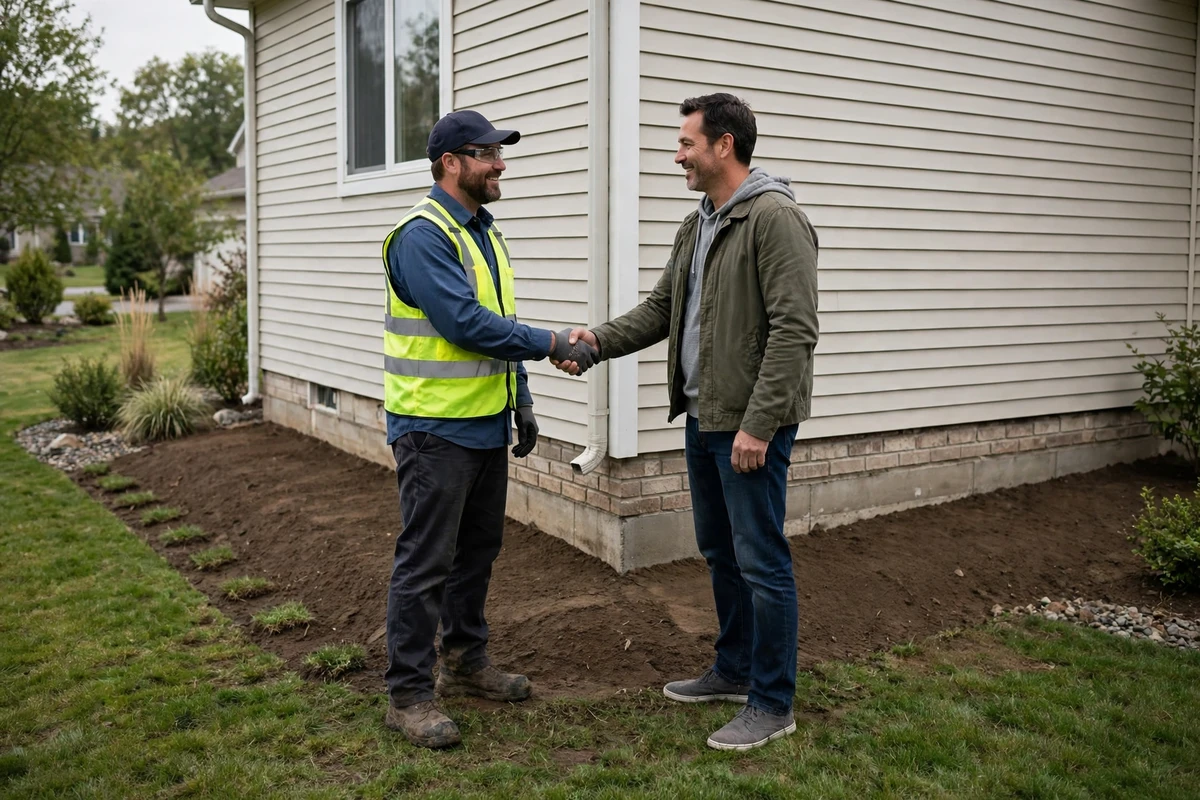
Local Conditions That Affect Foundation Repair in Old Westbury
Housing ranges from early-1900s estates and village homes to mid-century colonials and split-levels, many with full basements. Mature trees on older lots shade gutters and fill them quickly in the fall, and their roots can find their way into old clay drain lines.
Hillside lots send runoff downhill toward foundations on the low side of the house, and the uphill wall of a basement often takes the most pressure. The North Shore sits on the Harbor Hill moraine, the ridge of glacial debris left at the end of the last ice age, so many lots slope steeply toward the harbors and the Sound.
What that means for foundation repair in practice: Retaining walls that tilt or crack near the house deserve the same attention as the foundation itself. On fill placed to level a sloped lot, uneven settlement is common.
This page covers Old Westbury, ZIP code 11568. After a heavy storm, walk the uphill side of the house and look for water pooling against the foundation or a retaining wall.
Foundation Repair Services Available in Old Westbury
The sections below are ordered by how often each issue comes up in homes like those around Old Westbury. Each one explains what the work involves and the signs that suggest you may need it.
Bowing Basement Wall Repair in Old Westbury
Bowing walls are usually a water problem as well as a structural one: the pressure comes from wet or frozen soil, so drainage and grading improvements are part of a lasting repair. Walls that have moved more than a couple of inches may need to be excavated, straightened or rebuilt. An engineer's assessment helps determine which method is appropriate.
Given local conditions on Nassau County's North Shore, this is one of the more common requests in Old Westbury.
- Wall bowing inward or leaning at the top
- Water entering along the horizontal crack
- Gaps between the wall and the floor joists
Foundation Inspection in Old Westbury
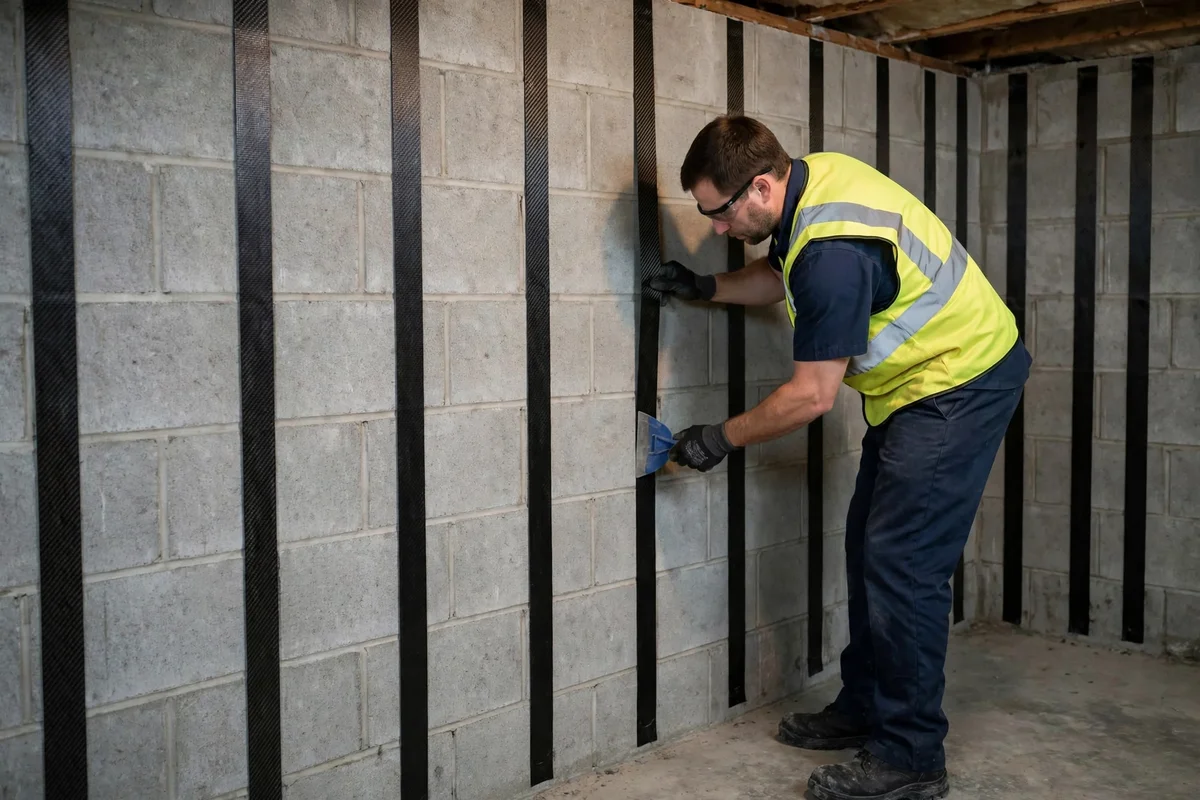
A foundation evaluation starts with how the house is moving, not just where it's cracked. Inspectors measure floor elevations with a digital level or manometer, check walls for plumb, map cracks by width, direction and offset, and look at drainage and soil around the house. The pattern tells the story: cracks wider at the top than the bottom, doors that stick on one side of the house and floors that slope toward one corner usually point to settlement in that area.
For Old Westbury homes, this is often one of the first things a pro will look at.
- Cracks in drywall above doors and windows
- Cracks in the foundation wider than about 1/4 inch
- Chimney leaning away from the house
Foundation Crack Injection in Old Westbury
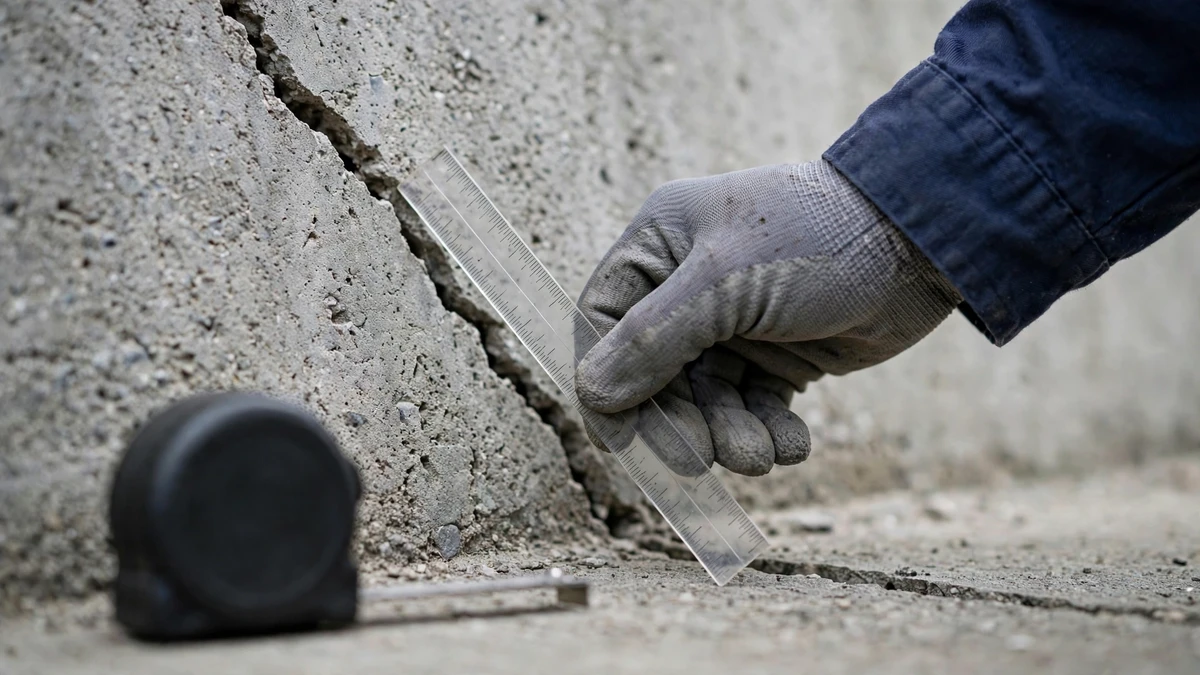
The direction and shape of a crack say a lot. Vertical hairline cracks in poured concrete are usually shrinkage. A crack wider at the top than the bottom suggests settlement at one end; a horizontal crack suggests soil pressing on the wall. Repair options run from flexible polyurethane injection for leaks to epoxy injection that bonds the concrete, combined where needed with reinforcement such as carbon fiber or steel to keep the crack from reopening.
For Old Westbury homes, this is often one of the first things a pro will look at.
- Cracks that have grown since you first noticed them
- Cracks wider than about 1/4 inch
- Water or rust stains at cracks
Foundation Settlement Repair for Old Westbury Homes
Settlement happens when the soil under part of a footing compresses, washes out or shrinks, and that section of the house drops. Common causes include fill that was never properly compacted, soil softened by poor drainage or a leaking pipe, tree roots drawing moisture from clay, and additions built on shallower footings than the original house. The repair usually involves stabilizing the footing on firmer soil or bedrock with piers.
- Brick separating from window frames
- A gap where an addition meets the house
- Floors that slope toward one corner
Push Piers and Helical Piers in Old Westbury
Underpinning shifts a footing's load from weak soil to a deeper layer that can carry it. Steel push piers are driven hydraulically under the footing until they hit load-bearing strata; helical piers are screwed into the ground and can be load-tested as they go in. Brackets tie the piers to the footing, and in some cases the structure can be gently raised. A contractor should tell you the expected depth, load capacity and any lifting plan before work starts.
- Footings on fill or soft soil
- A new addition or heavy load planned on an old footing
- Separation between the house and a porch or garage
Concrete Slab Leveling in Old Westbury
A slab that sinks toward the house is a waterproofing problem as much as a trip hazard, because it channels rain straight to the foundation. Before lifting, the cause of the settlement, often water washing out soil beneath the slab, should be addressed so the slab doesn't sink again. Cracked or crumbling slabs may need replacement rather than lifting.
- Driveway or walk sloping toward the house
- Trip hazards at slab joints
- Gaps between a slab and the foundation
Other Foundation Repair Services
Pros serving Old Westbury also handle stoop, step and porch repair, crawl space support and sagging floors. These come up less often locally but follow the same approach: find the source, then fix it.
Before You Call: What to Check
- Note doors and windows that stick, and where floors slope.
- Photograph cracks with a ruler or coin for scale, and note the date.
- Check where downspouts discharge near the foundation.
- Find any past inspection reports or repair records.
How Local Pros Typically Handle the Job
- Evaluation. Expect a floor-level survey, crack measurements and an inspection of walls and drainage.
- Cause. They explain what's moving and why: settlement, soil pressure, frost or poor drainage.
- Repair plan. Compare written plans for method, quantities, permits and warranty terms.
- Repair and drainage. Repairs are completed and drainage issues addressed so the problem doesn't return.
Old Westbury Foundation Repair FAQ
Will foundation repair in Old Westbury fix the cracks in my walls?
Stabilizing the foundation stops further movement, and some piering systems can lift a house partway back. Existing drywall and plaster cracks usually need to be repaired separately once the structure is stable.
Which foundation cracks in Old Westbury homes need attention?
Thin vertical cracks in poured concrete are usually shrinkage. Horizontal cracks, stair-step cracks in block or brick, cracks wider than about 1/4 inch, and cracks that keep growing or are offset should be evaluated. Retaining walls that tilt or crack near the house deserve the same attention as the foundation itself.
How long does foundation repair take in Old Westbury?
Crack injection is often finished in a day. Installing piers or wall anchors usually takes a few days, and larger jobs with excavation take longer. Permits and weather can affect timing.
Dawn Waterproofing connects homeowners with independent local service providers and does not perform the work. Availability, licensing, pricing and scheduling are set by the provider you speak with.