
Local Conditions That Affect Foundation Repair in Great River
Suffolk's South Shore faces the Great South Bay and Moriches Bay, with canals, creeks and marsh running behind many neighborhoods. Bulkheads along the canals hold back the water; when they fail, the ground behind them can erode and settle.
Housing near the water ranges from small summer bungalows converted to year-round homes to raised houses built to current flood codes. Salt air and occasional saltwater flooding speed up corrosion of fasteners, ductwork and equipment in crawl spaces.
What that means for foundation repair in practice: Spalling concrete and rust stains point to salt-related corrosion of reinforcing steel. Raised homes rely on piers and connections that should be inspected after major storms.
This page covers Great River, ZIP code 11739. Watch for water at the base of walls after full-moon high tides; it's an early sign the water table is reaching your foundation.
Types of Foundation Repairs for Great River Homes
Start with the first few sections: they cover the problems most often reported around Great River. Each includes what the work involves and the signs to watch for.
Foundation Assessment for Great River Homes
Contractors who sell repairs will often provide an evaluation, but for significant structural problems, real estate transactions or insurance claims, an independent structural engineer's report can be worth the cost. The report should explain the cause, not just the symptom, and recommend repairs. That makes it easier to compare bids, because every contractor is pricing the same scope.
In Great River, this ranks among the most frequent reasons homeowners call.
- Sloping or bouncy floors
- Cracks in drywall above doors and windows
- Gaps between walls and the ceiling or floor
Foundation Settlement Repair for Great River Homes
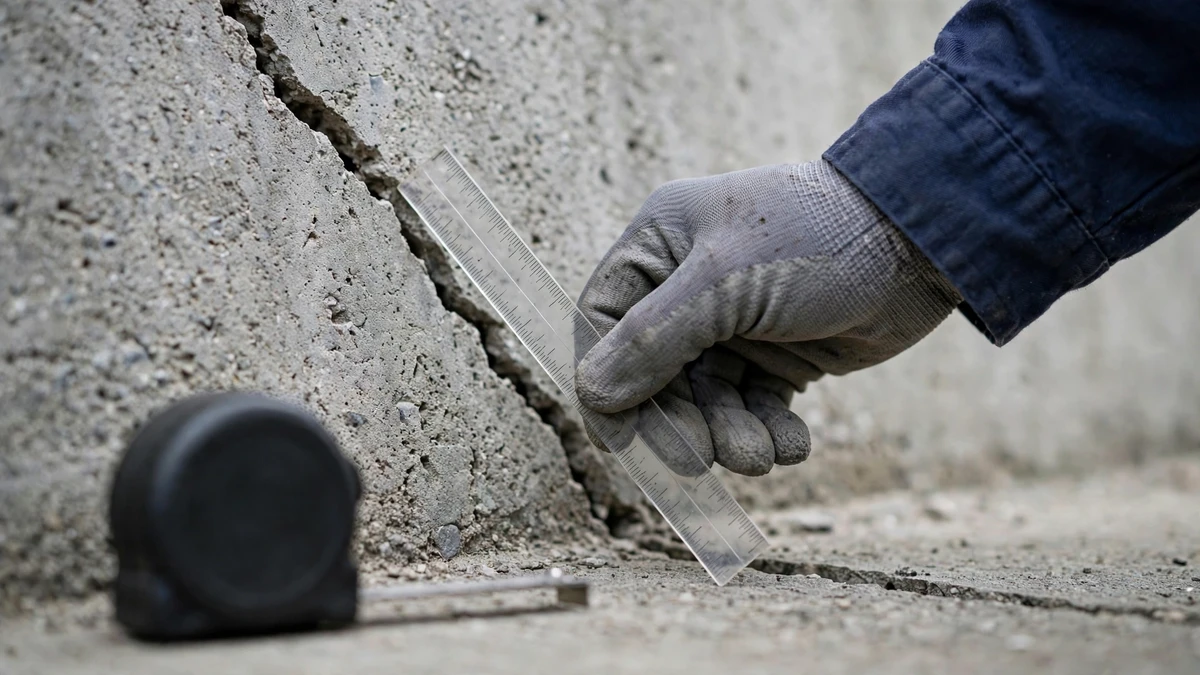
Foundation settlement happens when part of the house sinks because the soil beneath it gives way. Look for patterns: cracks that open wider toward the top, floors that slope toward one corner, doors that rub at the top, and gaps around windows or between an addition and the house. Repairs usually support the footing with piers that reach firmer soil, and they work best when the water problem that softened the soil is also fixed.
Given local conditions on Suffolk County's South Shore, this is one of the more common requests in Great River.
- A chimney pulling away from the wall
- Floors that slope toward one corner
- Doors that rub at the top on one side
Push Piers and Helical Piers in Great River
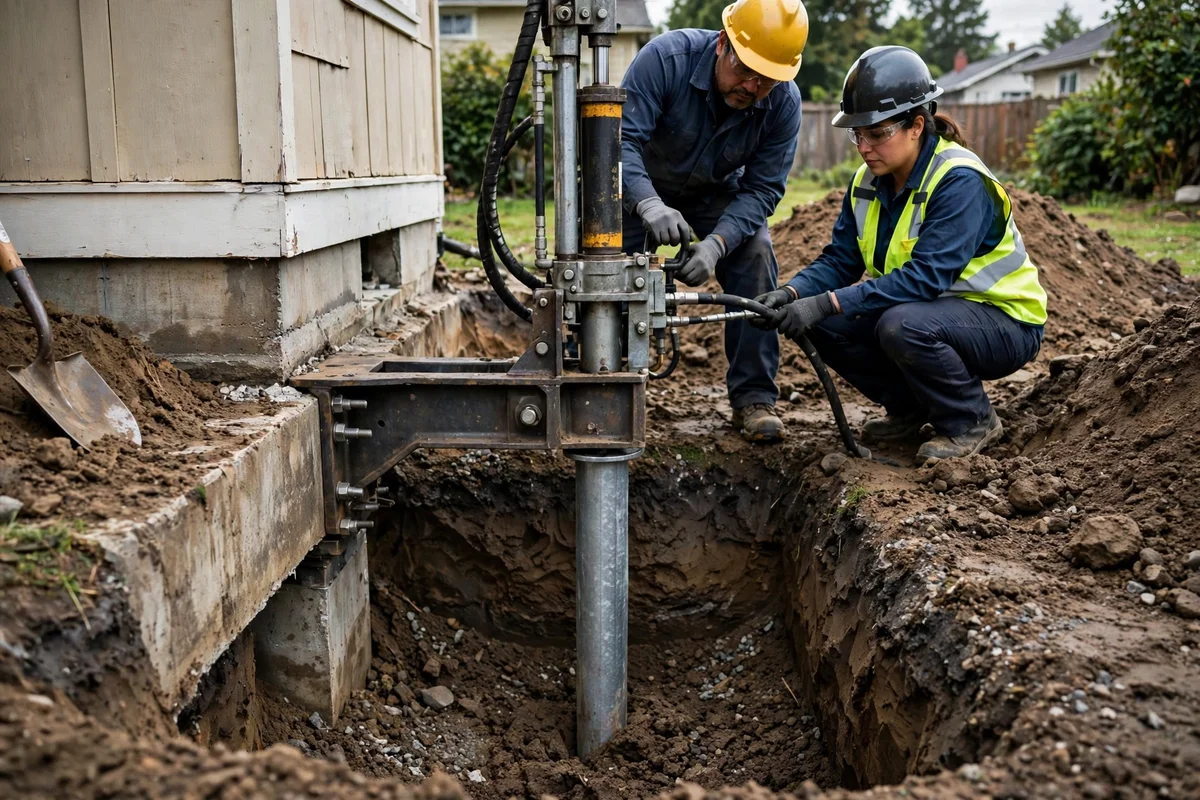
Piering transfers the weight of a settling footing down to load-bearing soil or bedrock. Push piers are steel tubes driven hydraulically under the footing, using the weight of the house as resistance. Helical piers have steel plates shaped like screw threads and are turned into the ground with a torque motor, so they can support lighter structures and new loads such as additions and porches. Once the piers are installed, brackets connect them to the footing, and the house can sometimes be lifted back toward its original position.
For Great River homes, this is often one of the first things a pro will look at.
- A corner of the house measurably lower than the rest
- Footings on fill or soft soil
- Ongoing settlement that crack repair hasn't stopped
Sagging Floor and Crawl Space Repair in Great River
Sagging or bouncy floors above a crawl space usually trace to beams and joists that are undersized, spaced too far apart, damaged by moisture or supported by posts on inadequate footings. Adjustable steel support jacks on proper footings can add support under beams, and sistering new lumber to damaged joists restores strength. Moisture control is part of the repair, because wet crawl spaces lead to rot and termite damage.
- Posts sitting on loose stones or bare soil
- Floors that slope, sag or feel bouncy
- Wood rot or mold on beams and joists
Slab Lifting and Concrete Leveling in Great River
Sunken driveways, walks, patios, garage floors and basement slabs can often be lifted instead of replaced. Polyurethane foam injection pumps expanding foam through small holes drilled in the slab; it's light, cures quickly and adds little weight to soft soil. Mudjacking uses a cement-based slurry and larger holes. Either method can restore slope so water drains away from the house instead of toward it.
- Gaps between a slab and the foundation
- Cracks in a basement or garage slab
- Driveway or walk sloping toward the house
Foundation Crack Repair in Great River
Not all foundation cracks are equal. Thin vertical cracks in poured concrete are usually shrinkage and are mainly a leak risk. Stair-step cracks in block or brick, horizontal cracks, cracks that are wider at one end, and cracks where one side has moved relative to the other indicate movement and need an evaluation. Epoxy injection bonds a structural crack back together; polyurethane injection seals a crack against water while allowing slight movement.
- Stair-step cracks in block or brick
- Water or rust stains at cracks
- One side of a crack offset from the other
Other Foundation Repair Services
Pros serving Great River also handle bowing and leaning wall repair, stoop, step and porch repair. These come up less often locally but follow the same approach: find the source, then fix it.
Before You Call: What to Check
- Check where downspouts discharge near the foundation.
- Find any past inspection reports or repair records.
- Mark the ends of cracks with a pencil so you can see whether they grow.
- Note doors and windows that stick, and where floors slope.
How Local Pros Typically Handle the Job
- Evaluation. The pro measures floor levels, maps cracks and checks walls for plumb, inside and out.
- Cause. A good evaluation identifies the cause, not just the symptom, before proposing a repair.
- Repair plan. Compare written plans for method, quantities, permits and warranty terms.
- Repair and drainage. After the repair, drainage fixes such as downspout extensions or regrading help keep it stable.
Great River Foundation Repair FAQ
Should I get a structural engineer in Great River?
For major cracks, bowing walls, significant settlement, or when buying or selling a home, an independent engineer's report helps define the problem and makes contractor quotes easier to compare.
Can drainage problems cause foundation damage in Great River?
Yes. Saturated or frozen soil adds pressure and can soften or wash out soil under footings. Fixing gutters, downspouts and grading is often part of a lasting foundation repair.
Which foundation cracks in Great River homes need attention?
Thin vertical cracks in poured concrete are usually shrinkage. Horizontal cracks, stair-step cracks in block or brick, cracks wider than about 1/4 inch, and cracks that keep growing or are offset should be evaluated. Raised homes rely on piers and connections that should be inspected after major storms.
Dawn Waterproofing connects homeowners with independent local service providers and does not perform the work. Availability, licensing, pricing and scheduling are set by the provider you speak with.