Common Causes of Water Damage in Hampton
Winters are cold with deep frost and spring snowmelt, and the thaw is when basements most often take water. Rural homes rely on wells and septic systems.
Low-lying properties near the Hudson River and its tributaries can experience flooding. Northern Saratoga and Washington counties mix sandy soils with clay deposits, so drainage can vary block by block.
What that means for water damage in practice: Frozen pipes and ice dams are major winter risks. Prompt drying prevents mold in older homes.
This page covers Hampton, ZIP code 12837. Check your sump pump before the spring thaw begins.
Water Damage Cleanup Services for Hampton Homes
The sections below are ordered by how often each issue comes up in homes like those around Hampton. Each one explains what the work involves and the signs that suggest you may need it.
Frozen Pipe Water Damage Repair in Hampton
When water freezes in a pipe it expands, and the pressure often splits the pipe somewhere other than where the ice formed. The leak usually starts when the pipe thaws, which is why burst pipes are often discovered after a cold snap breaks. The first step is to shut off the main water valve; everyone in the house should know where it is. Pipes on exterior walls, in crawl spaces, garages and attics, and in cabinets on outside walls are the most vulnerable.
In Hampton, this ranks among the most frequent reasons homeowners call.
- The sound of running water when nothing is on
- Water spraying or dripping from a pipe
- Bulging or wet drywall near a pipe
Water-Damaged Drywall and Ceilings in Hampton
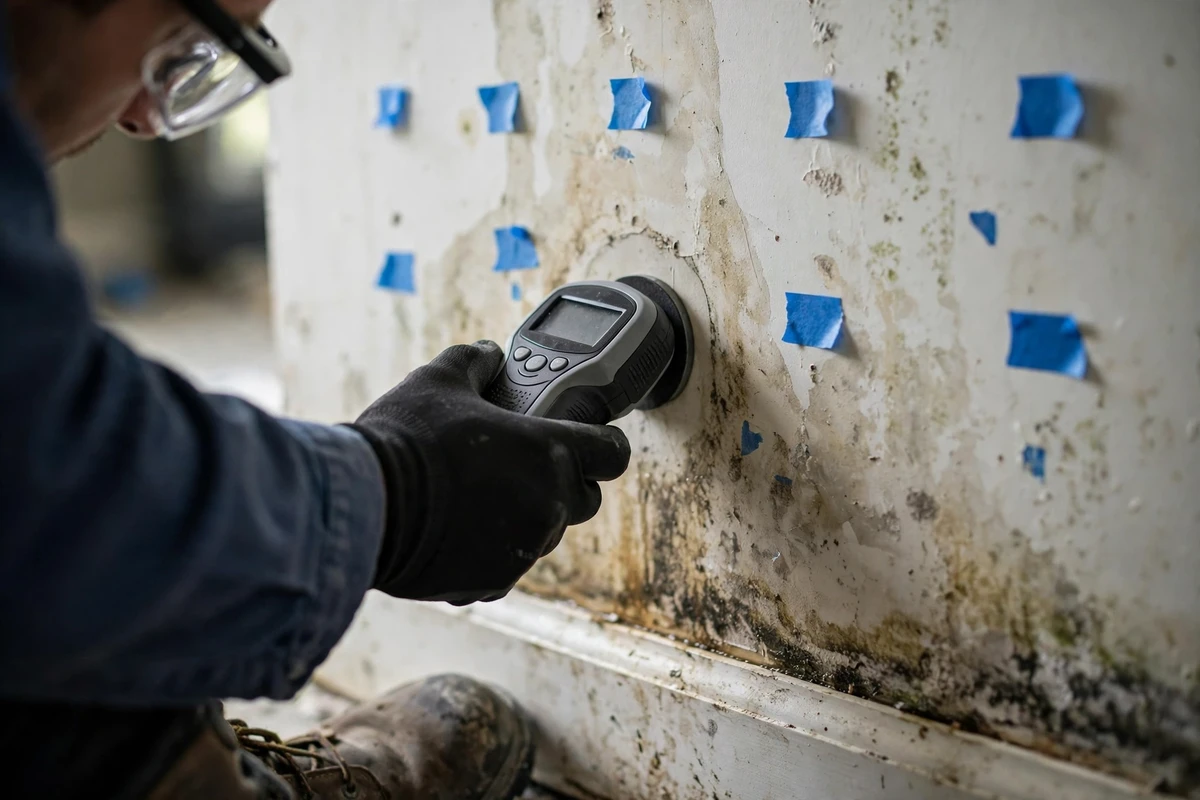
Ceiling stains are often the first sign of a leak above. The source may be the roof, an ice dam, a bathroom upstairs or a pipe in the ceiling, and the stain doesn't always sit directly under it. A bulging ceiling may be holding water and can give way, so keep people out from under it. Once the source is fixed, wet drywall is removed, the cavity and framing are dried, and new drywall is installed and finished.
In Hampton, this ranks among the most frequent reasons homeowners call.
- Water dripping from light fixtures
- Sagging or bulging ceiling drywall
- Stains below bathrooms or under the roof
Emergency Water Extraction in Hampton
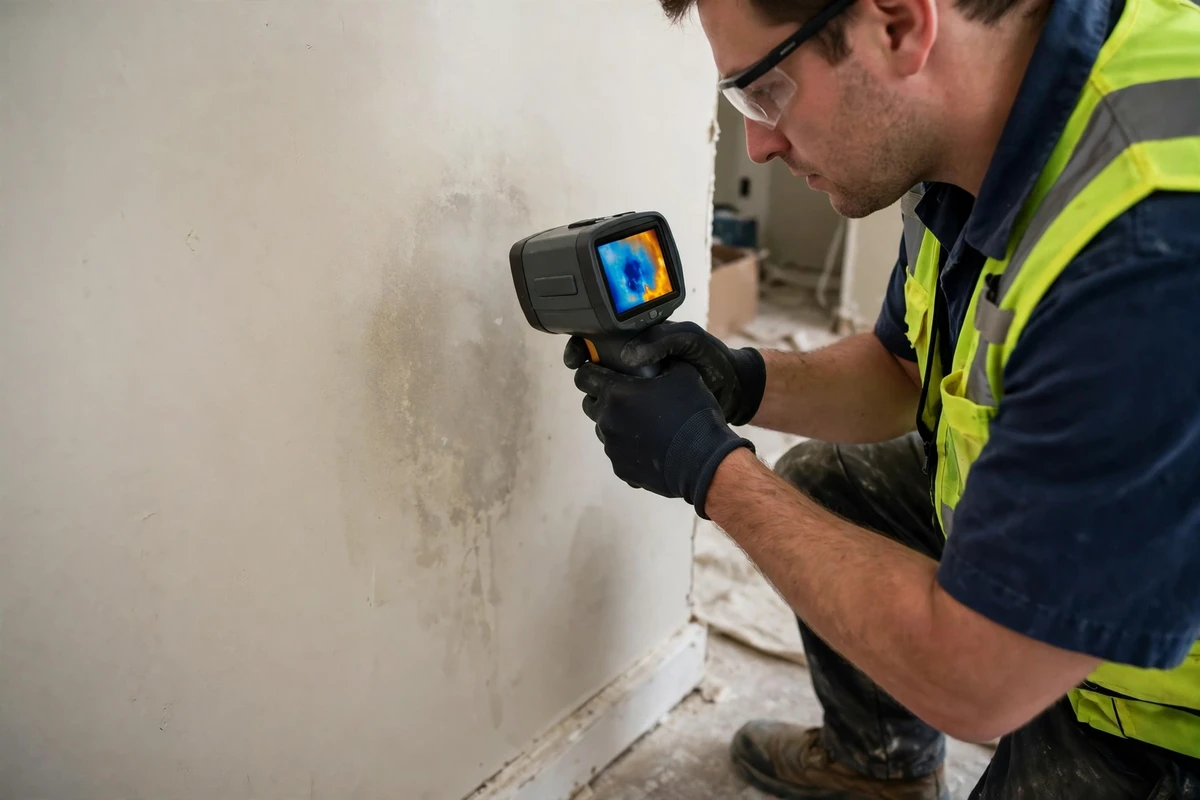
Before anyone walks into standing water, the power to that area should be shut off at the panel if you can reach it safely. Once the water is out, technicians remove wet carpet pad, which rarely dries properly in place, and check for moisture that has wicked into walls and under flooring. Thorough extraction shortens drying time and reduces the risk of mold.
In Hampton, this ranks among the most frequent reasons homeowners call.
- Soaked carpet and pad
- Standing water on floors
- Storm or groundwater flooding
Water Damage Drying in Hampton
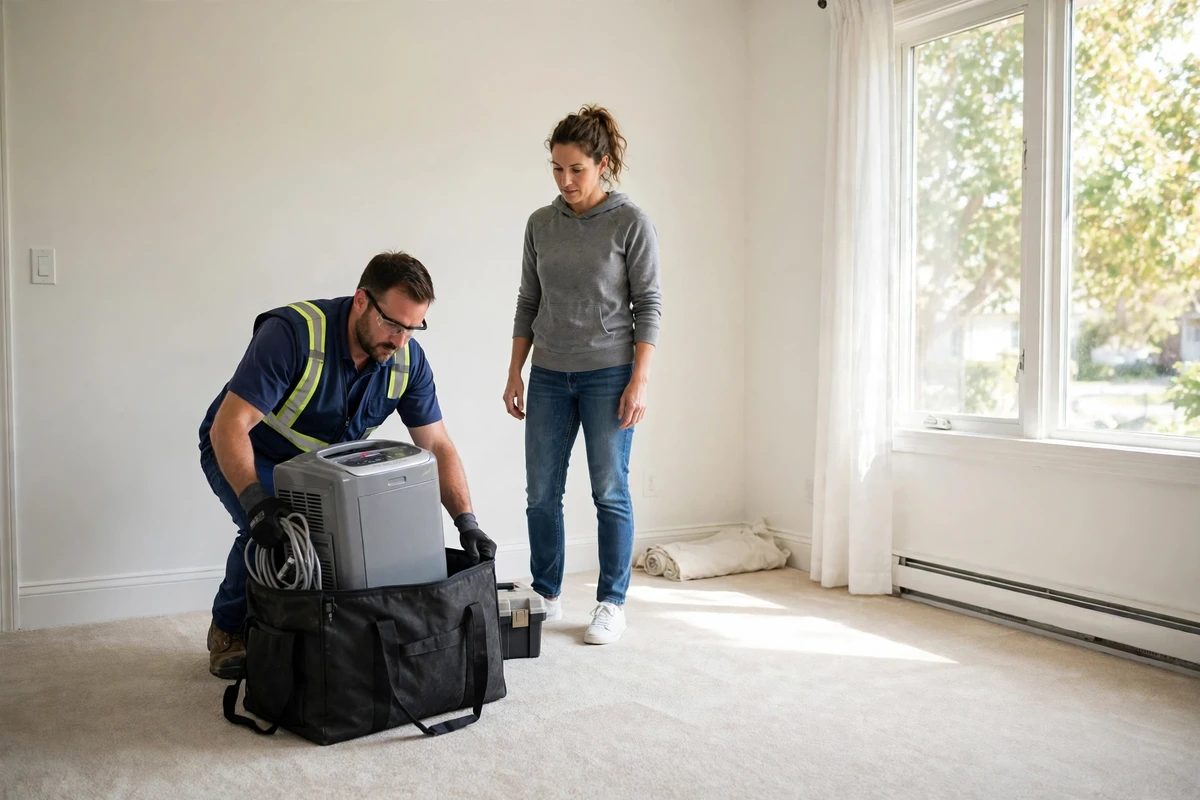
Removing visible water is only the start. Drywall, framing, subfloors and concrete absorb water and can stay wet for weeks without professional drying. Restoration crews set up air movers to move air across wet surfaces and commercial dehumidifiers to pull moisture out of the air, and they measure moisture in materials each day until readings return to normal. Drying usually takes three to five days, depending on materials and conditions.
- Swollen or cupping wood flooring
- Peeling paint or bubbling wall surfaces
- Wet insulation behind walls
Basement Flood Cleanup in Hampton
Basement flooding comes from several sources: groundwater rising through the floor and walls, surface water entering through window wells and doors, a failed sump pump, or sewer water backing up through drains. Cleanup starts with pumping out the water, then removing wet carpet, pad and damaged drywall, cleaning and disinfecting surfaces, and drying the space with professional equipment.
- Mud or debris left after the water recedes
- Water entering through walls or the floor
- Soaked carpet, drywall or stored items
Mold Remediation After Water Damage in Hampton
Mold can begin to grow on wet materials within 24 to 48 hours, which is why fast drying matters so much. Once mold is established, remediation involves containing the area with plastic sheeting and negative air pressure so spores don't spread, removing moldy porous materials, cleaning surfaces with HEPA vacuums and antimicrobial treatment, and drying the area thoroughly. The moisture source has to be fixed, or the mold will return.
- Musty smell that doesn't go away
- Visible mold on walls, ceilings or stored items
- Discolored drywall or baseboards
Other Water Damage Services
Pros serving Hampton also handle storm and roof leak water damage, sewage backup cleanup, contents cleaning and insurance documentation. These come up less often locally but follow the same approach: find the source, then fix it.
Before You Call: What to Check
- Photograph damage before moving items.
- Shut off the water at the main valve if a pipe or fixture is leaking.
- Move valuables and documents to a dry area.
- Turn off power to wet areas only if you can do it without standing in water.
How Local Pros Typically Handle the Job
- Emergency response. First, the water source is shut off, the area is made safe and standing water is removed.
- Assessment. Technicians trace where water traveled inside walls and floors and classify how contaminated it is.
- Removal and drying. Unsalvageable materials are removed, and air movers and dehumidifiers dry the structure with daily readings.
- Documentation and repair. Photos, readings and item lists are compiled for insurance, and repairs can begin once dry.
Hampton Water Damage FAQ
What should I do first after water damage in Hampton?
Stop the water at the main shut-off if it's a plumbing leak, make the area safe, photograph the damage and call your insurer. Extraction and drying should start as soon as possible, because mold can begin within 24 to 48 hours. Prompt drying prevents mold in older homes.
How long does it take to dry a Hampton home after water damage?
Structural drying commonly takes three to five days, depending on how much water there was, the materials affected and the weather. Daily moisture readings show when materials are dry.
Is flood water treated differently from a burst pipe in Hampton?
Yes. Water from a supply line is clean water and can often be dried in place if handled quickly. Flood water and sewage are contaminated, so porous materials they touched are usually removed. Insurance coverage also differs by source.
Dawn Waterproofing connects homeowners with independent local service providers and does not perform the work. Availability, licensing, pricing and scheduling are set by the provider you speak with.