Common Causes of Water Damage in Adirondack
Lakefront and riverfront homes face high groundwater and spring flooding from snowmelt. Winters are long and cold, with deep frost, heavy snow and roof ice dams.
The southern Adirondacks have thin, rocky soils over granite and gneiss, so groundwater runs along the rock and can enter basements on sloped lots. Spring mud season can saturate soil around foundations for weeks.
What that means for water damage in practice: Frozen and burst pipes in unoccupied homes are the biggest winter risk. Spring snowmelt flooding can fill basements and crawl spaces.
This page covers Adirondack, ZIP code 12808. Remove snow from roof edges to reduce ice dams in midwinter.
Water Damage Restoration Services in Adirondack
The sections below are ordered by how often each issue comes up in homes like those around Adirondack. Each one explains what the work involves and the signs that suggest you may need it.
Frozen Pipe Water Damage Repair in Adirondack
Burst pipes cause some of the most sudden water damage a house can have. A small split can release hundreds of gallons in a few hours, and the water often travels inside walls and ceilings before it's seen. Shut off the main valve, open faucets to drain the system, and turn off power to wet areas if it's safe. After the cleanup, take a hard look at why the pipe froze: missing insulation, drafts or a cold cabinet on an exterior wall.
In Adirondack, this ranks among the most frequent reasons homeowners call.
- The sound of running water when nothing is on
- Frost on exposed pipes
- A sudden drop in water pressure in winter
Water-Damaged Drywall and Ceilings in Adirondack
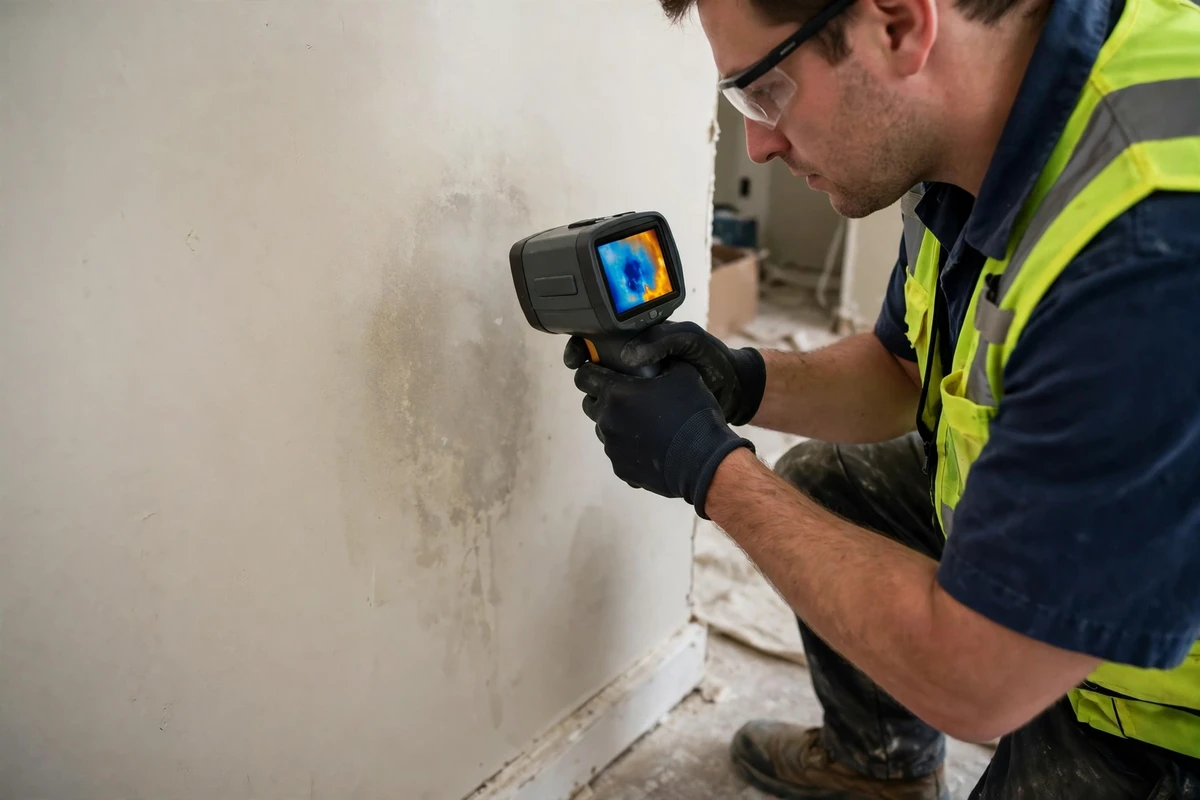
Water stains on a ceiling usually come from a roof leak, an ice dam, a leaking shower or toilet above, or condensation from ducts and pipes. A sagging or bulging ceiling may be holding water and can collapse, so stay out from under it and, if it's safe, puncture a small hole to drain it into a bucket. Thermal cameras and moisture meters help find how far the water has spread before ceilings are opened.
In Adirondack, this ranks among the most frequent reasons homeowners call.
- Brown or yellow stains on ceilings
- Soft or crumbling drywall
- Peeling paint or bubbling on ceilings
Emergency Water Extraction in Adirondack
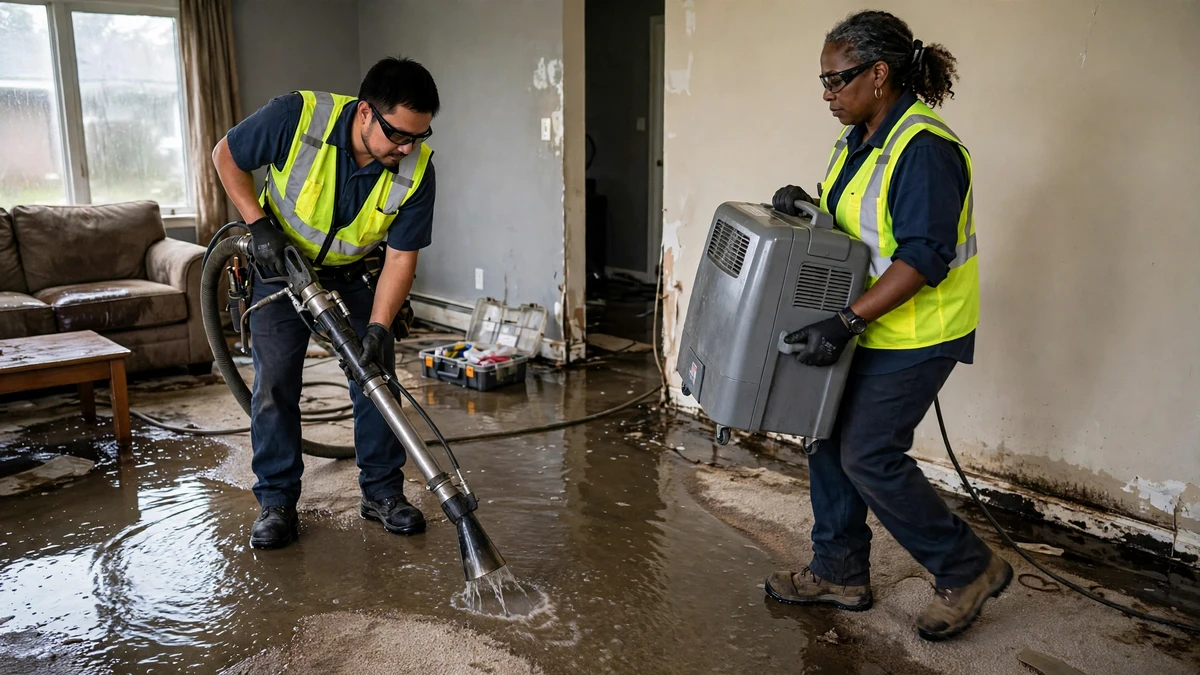
Getting the water out is the step that determines how much can be saved. Pumps handle standing water, and powerful extraction wands pull water out of carpet and padding far better than household equipment. Crews also check for water hiding under flooring, in wall cavities and below cabinets. The faster this happens, the less water soaks into drywall, framing and subfloors, which keeps drying time and repair costs down.
For Adirondack homes, this is often one of the first things a pro will look at.
- Storm or groundwater flooding
- Water that has spread under walls into other rooms
- Standing water on floors
Water Damage Drying in Adirondack
Removing visible water is only the start. Drywall, framing, subfloors and concrete absorb water and can stay wet for weeks without professional drying. Restoration crews set up air movers to move air across wet surfaces and commercial dehumidifiers to pull moisture out of the air, and they measure moisture in materials each day until readings return to normal. Drying usually takes three to five days, depending on materials and conditions.
- Wet insulation behind walls
- Damp drywall or baseboards after the water is gone
- Swollen or cupping wood flooring
Basement Flood Cleanup in Adirondack
If floodwater came from outside or from a sewer, it is considered contaminated, and porous materials it touched, like carpet, pad, insulation and the lower part of drywall, are usually removed. Technicians often make a flood cut, removing drywall a foot or two above the water line so the wall cavity can dry and be disinfected. Flood insurance and homeowners policies treat these sources differently, so note where the water came from.
- Water through window wells or basement doors
- Standing water in the basement
- Water entering through walls or the floor
Mold Remediation After Water Damage in Adirondack
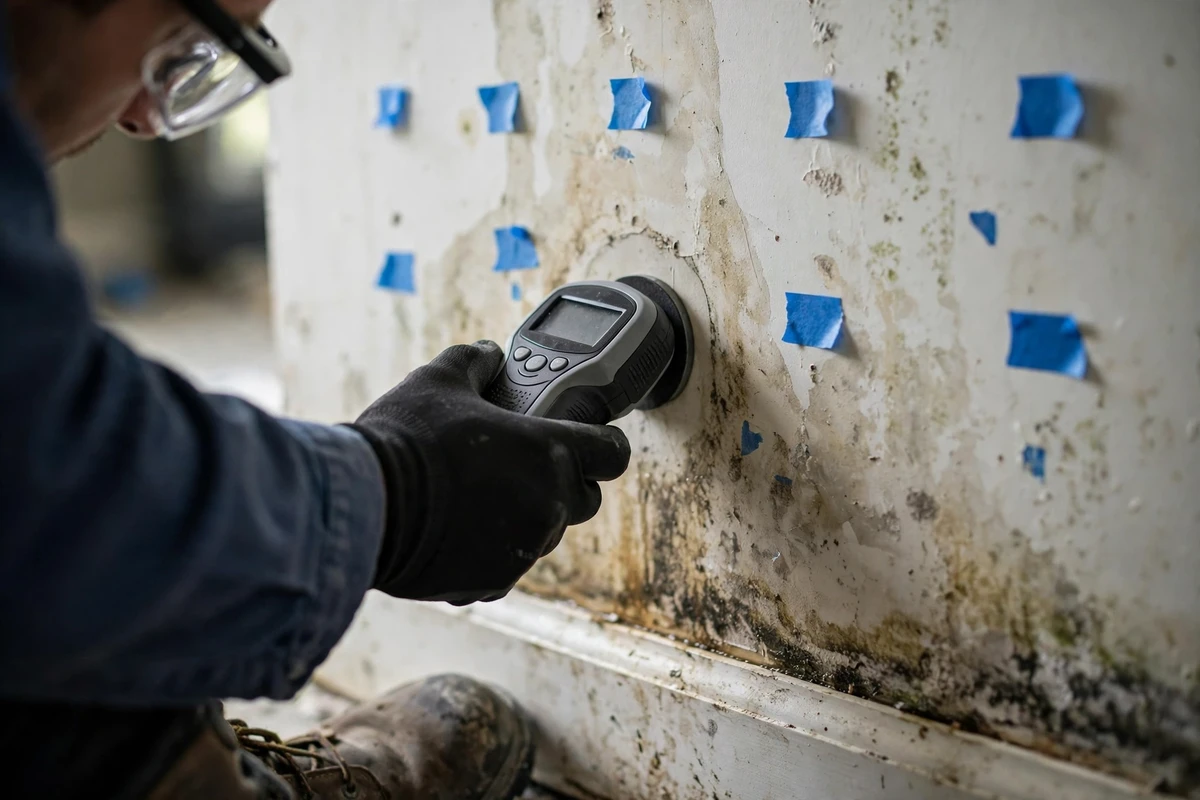
Small areas of surface mold on hard surfaces can sometimes be cleaned by homeowners, but larger areas, mold inside walls, and mold after sewage or flood water should be handled by professionals. Testing is not always necessary when mold is visible; what matters is removing it and fixing the moisture problem. New York State requires licensed mold assessors and remediators for projects over 10 square feet.
- Water damage that wasn't dried within two days
- Musty smell that doesn't go away
- Allergy symptoms that worsen at home
Other Water Damage Services
Pros serving Adirondack also handle storm and roof leak water damage, contents cleaning and insurance documentation, sewage backup cleanup. These come up less often locally but follow the same approach: find the source, then fix it.
Before You Call: What to Check
- Photograph damage before moving items.
- Shut off the water at the main valve if a pipe or fixture is leaking.
- Call your insurance company to start a claim.
- Turn off power to wet areas only if you can do it without standing in water.
How Local Pros Typically Handle the Job
- Emergency response. The source is stopped, the area is made safe and standing water is extracted.
- Assessment. Moisture meters and thermal cameras map how far the water spread, and the water category is determined.
- Removal and drying. Wet materials that can't be saved come out, and drying equipment runs with daily moisture checks.
- Documentation and repair. Photos, readings and item lists are compiled for insurance, and repairs can begin once dry.
Adirondack Water Damage FAQ
How long does it take to dry a Adirondack home after water damage?
Structural drying commonly takes three to five days, depending on how much water there was, the materials affected and the weather. Daily moisture readings show when materials are dry.
What should I do first after water damage in Adirondack?
Stop the water at the main shut-off if it's a plumbing leak, make the area safe, photograph the damage and call your insurer. Extraction and drying should start as soon as possible, because mold can begin within 24 to 48 hours. Spring snowmelt flooding can fill basements and crawl spaces.
Does homeowners insurance cover water damage in Adirondack?
It depends on the source. Sudden leaks from pipes and appliances are commonly covered; surface flooding needs flood insurance; sewer backups often need a separate rider; slow, long-term leaks are frequently excluded. Check your policy and call your insurer early.
Dawn Waterproofing connects homeowners with independent local service providers and does not perform the work. Availability, licensing, pricing and scheduling are set by the provider you speak with.